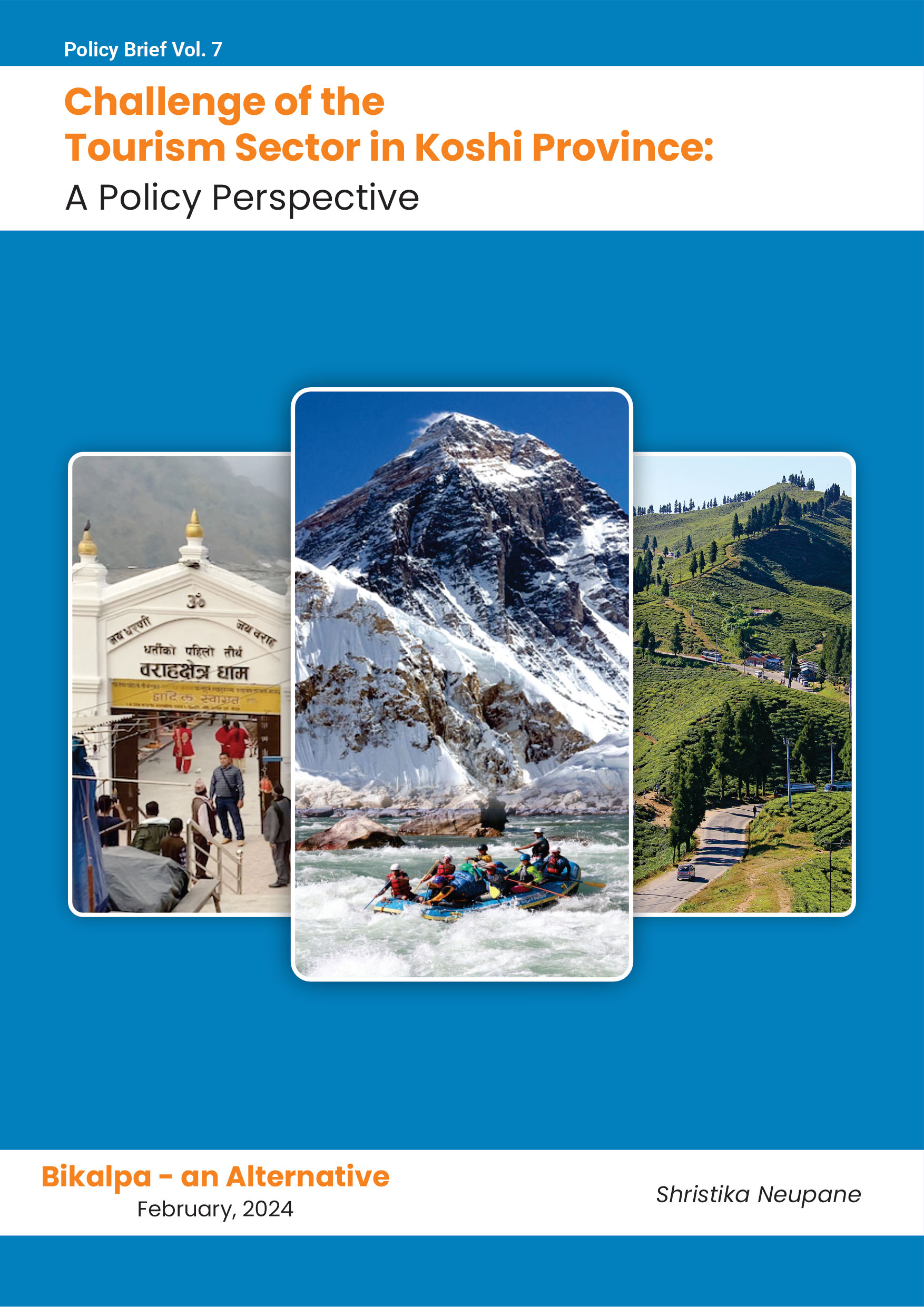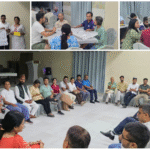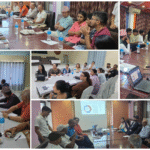
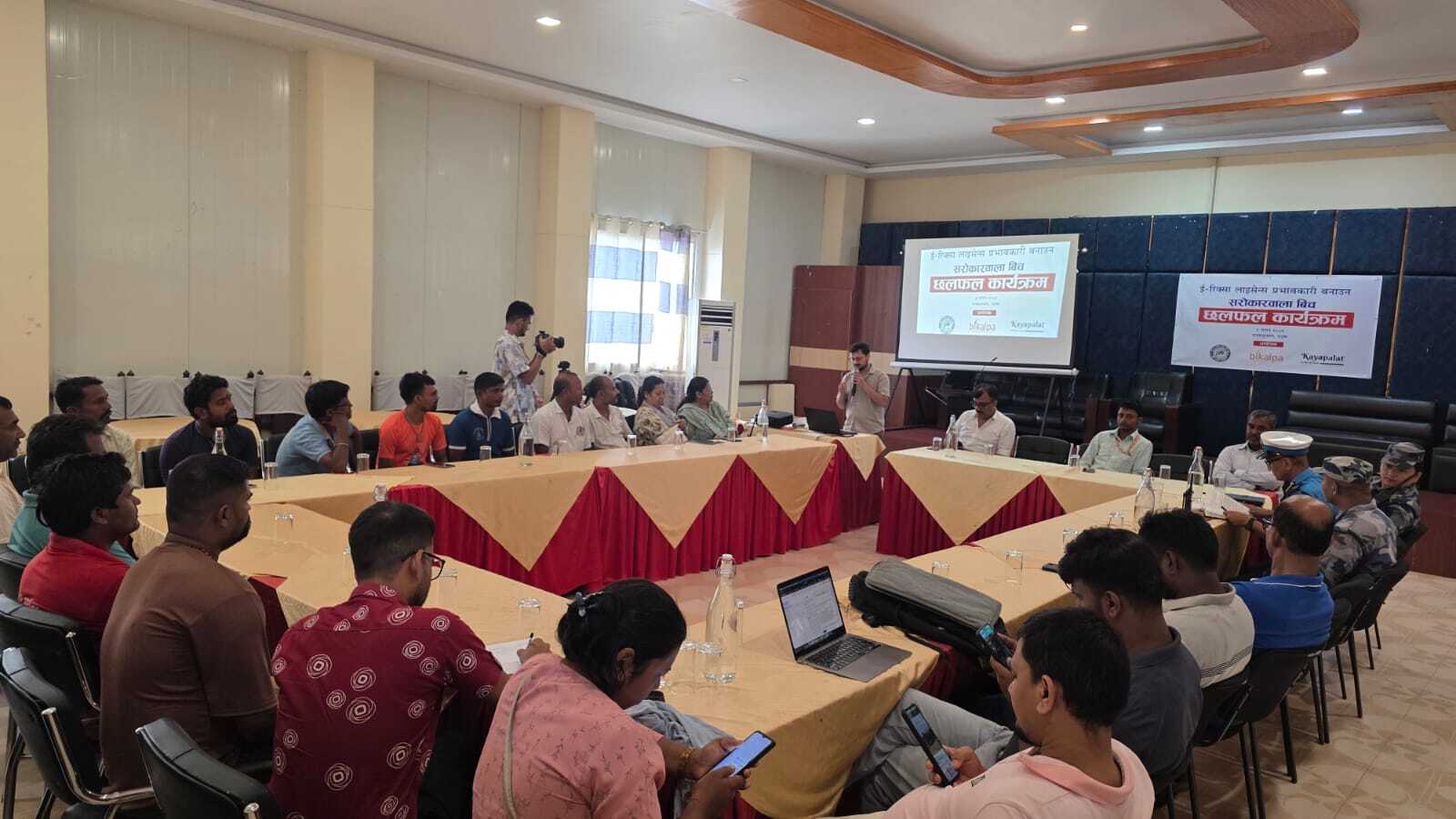
On 20 July 2026, Bikalpa – An Alternative, in collaboration with Kayapalat Nepal and the Nepal E-Rickshaw Workers Organization, Dhanusha, organized a multi-stakeholder dialogue in Janakpurdham, Madhesh Province, to discuss strategies for effectively implementing the newly introduced alternative licensing system for e-rickshaw drivers. The dialogue brought together representatives from the Ministry of Labour, Transport and Communication, District Traffic Police Office, Armed Police Force, Janakpurdham Sub-Metropolitan City, the National Human Rights Commission, insurance companies, media, civil society organizations, and e-rickshaw associations.
The programme commenced with a video presentation on the Safe Driver Campaign implemented in Biratnagar, Koshi Province, demonstrating how simplifying the licensing process, combined with awareness campaigns, stakeholder coordination, and positive incentives, significantly increased the number of licensed e-rickshaw drivers while promoting road safety. Through collaboration among the Traffic Police, educational institutions, e-rickshaw associations, and Bikalpa, thousands of drivers were encouraged to obtain driving licenses. Licensed drivers were provided with identifiable “Safe Driver” jackets and included in a digital database, improving driver identification, public confidence, and the overall management of the e-rickshaw sector.
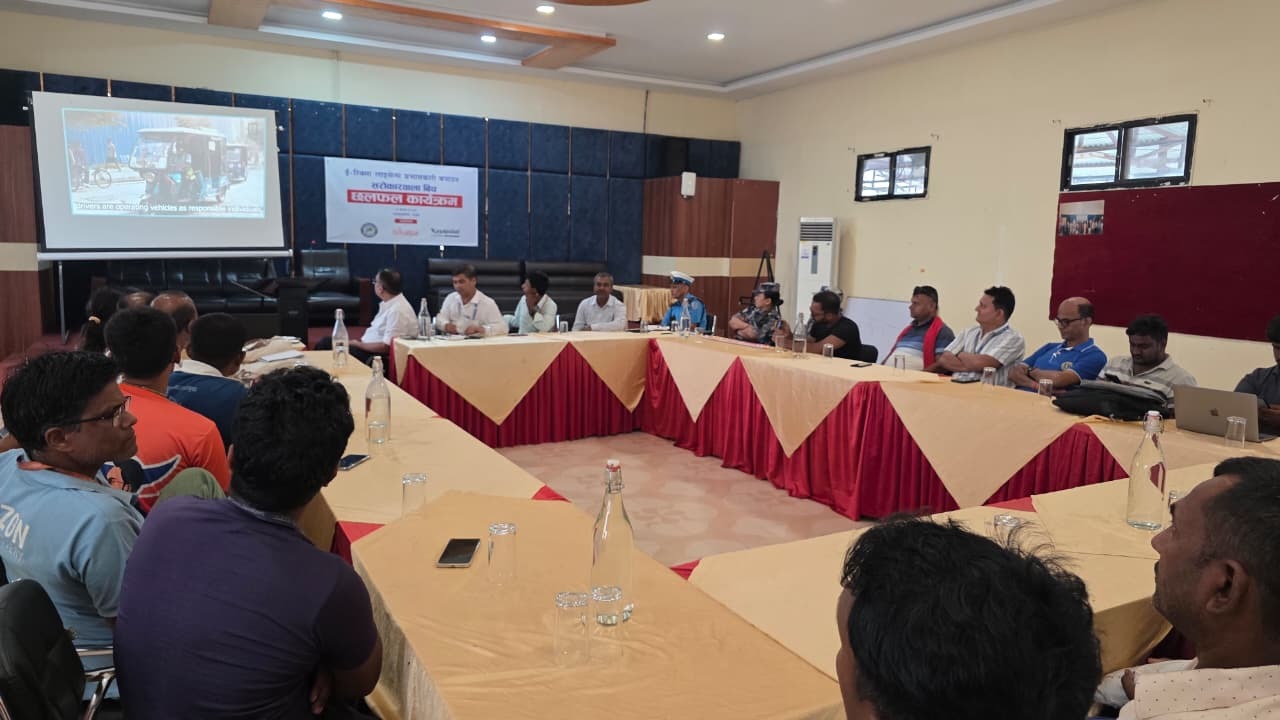
Participants observed that the experience from Koshi Province offers valuable lessons for Madhesh Province. While the recent policy reform has created an enabling environment by introducing an alternative licensing pathway, they emphasized that sustained awareness, coordinated stakeholder engagement, and community participation are essential to ensure its successful implementation.
Opening the discussion, Mr. Basanta Adhikari, Director of Bikalpa – An Alternative, highlighted that the dialogue aimed to move beyond policy reform and focus on implementation. He called upon both direct and indirect stakeholders to take shared responsibility for raising awareness among e-rickshaw drivers about the new licensing provisions and to identify practical roles each institution could play in encouraging eligible drivers to obtain licenses.
Providing an update on the progress made by the Madhesh Province Government, Mr. Dhananjay Kumar Singh, Under Secretary and Spokesperson at the Ministry of Labour and Transport, shared that the recent policy reform was the result of collaborative research and sustained advocacy by Bikalpa, Kayapalat Nepal, the Nepal E-Rickshaw Workers’ Union, and the Ministry. Drawing on evidence generated through studies conducted across Madhesh, Bagmati, and Koshi Provinces, the Ministry adopted the successful licensing model implemented in Koshi Province.
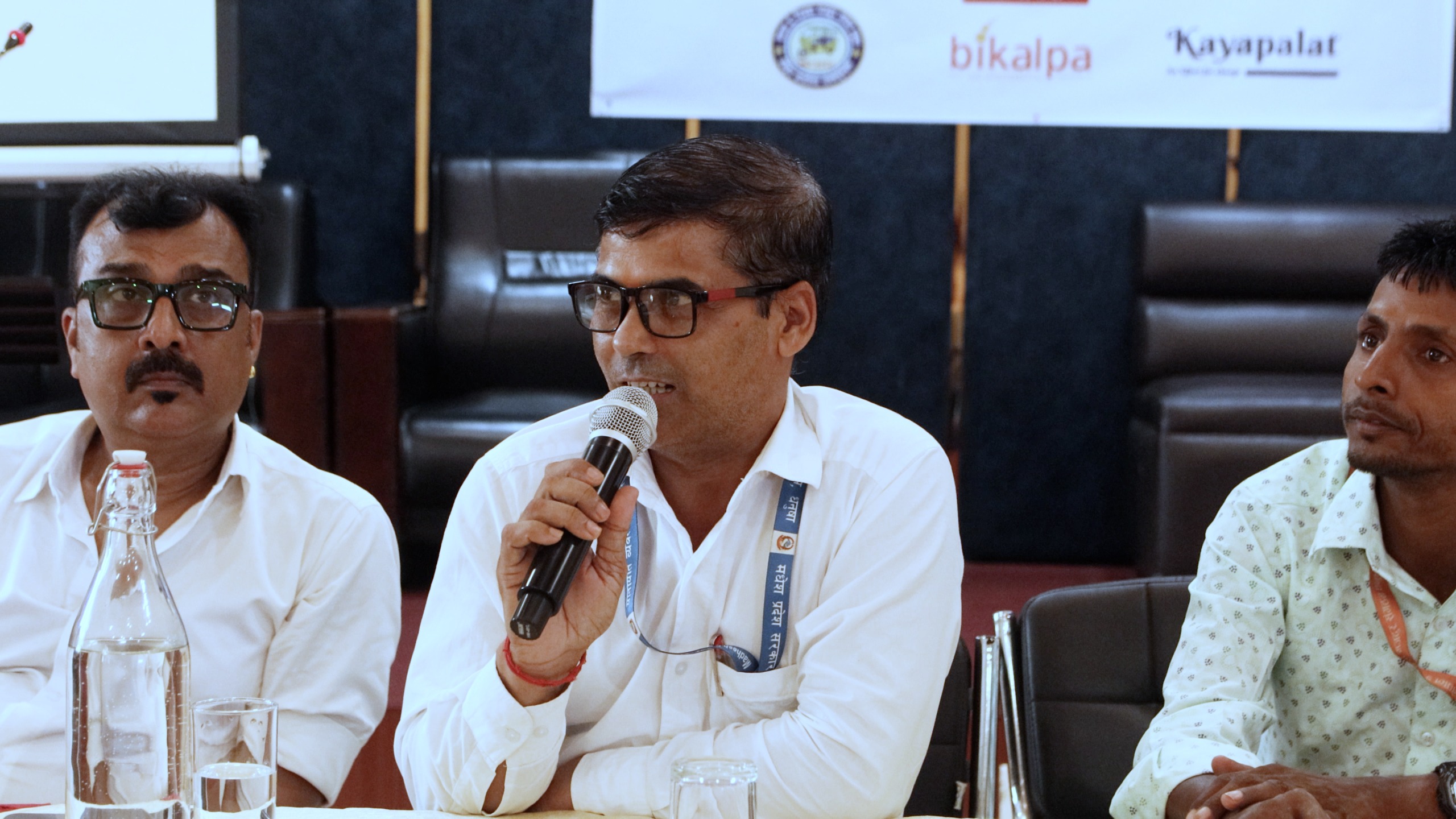
Mr. Singh informed participants that the Province has officially introduced an alternative licensing procedure for e-rickshaw drivers by replacing the written examination with a visual-based orientation and practical driving test, making the licensing process more accessible for drivers with limited literacy. He further shared that the transport and licensing system has been fully digitized to improve service delivery and administrative efficiency.
Acknowledging that more than 80 percent of e-rickshaw drivers had previously remained unlicensed due to literacy-related barriers, Mr. Singh emphasized that the new system seeks to make licensing more inclusive without compromising road safety standards. He noted that the Ministry has already begun issuing licenses under the revised system and reaffirmed its commitment to continuously improving implementation based on field experience and stakeholder feedback. Responding to concerns regarding the limited daily processing capacity, he acknowledged the need to strengthen implementation and encouraged continued collaboration among government agencies, transport stakeholders, and civil society organizations to ensure that more eligible drivers benefit from the reform.
Speaking on behalf of the District Traffic Police Office, Janakpurdham, Chief Police Inspector Khagendra Kumar Dahal reaffirmed the Traffic Police’s commitment to supporting the effective implementation of the new licensing system. Emphasizing that the Traffic Police serves not only as an enforcement agency but also as a partner in improving road safety and transport management, he assured participants that the office would provide all possible support within the existing legal framework to facilitate the initiative.
Making a strong commitment during the discussion, Chief Police Inspector Dahal stated that if stakeholders develop proposals to facilitate e-rickshaw licensing in accordance with existing laws, the District Traffic Police Office is ready to provide its full support at any time. He remarked that he would be available even at midnight if required, underscoring the Traffic Police’s dedication to collaborating closely with all concerned stakeholders.
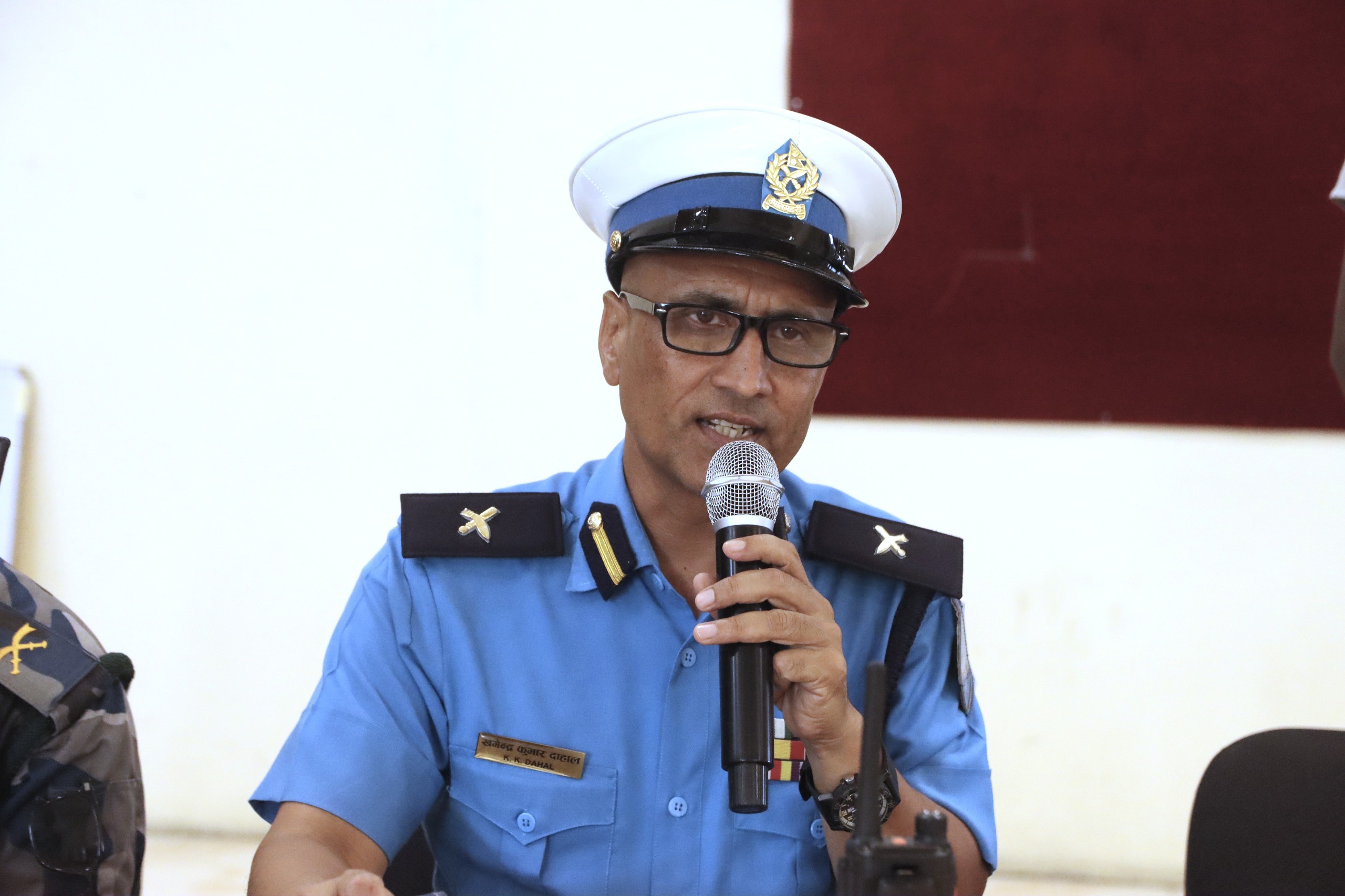
Drawing on field experience, he further explained that the Traffic Police has adopted a more community-oriented approach by engaging directly with e-rickshaw drivers at their workplaces instead of expecting them to attend lengthy meetings. Through these regular interactions, the office has been identifying operational challenges related to parking management, road discipline, and traffic safety while simultaneously promoting responsible driving practices. He also shared that the Traffic Police has developed short awareness videos demonstrating proper parking practices, which are being shown to drivers at major parking locations to improve compliance and traffic management in Janakpurdham.
Representatives from the insurance sector also pledged their support for the initiative by committing to participate in awareness campaigns on driver licensing and road safety. They further expressed their willingness to provide “Safe Driver” jackets to licensed e-rickshaw drivers, replicating the successful model implemented in Koshi Province, and to collaborate with stakeholders in promoting responsible driving and insurance coverage.
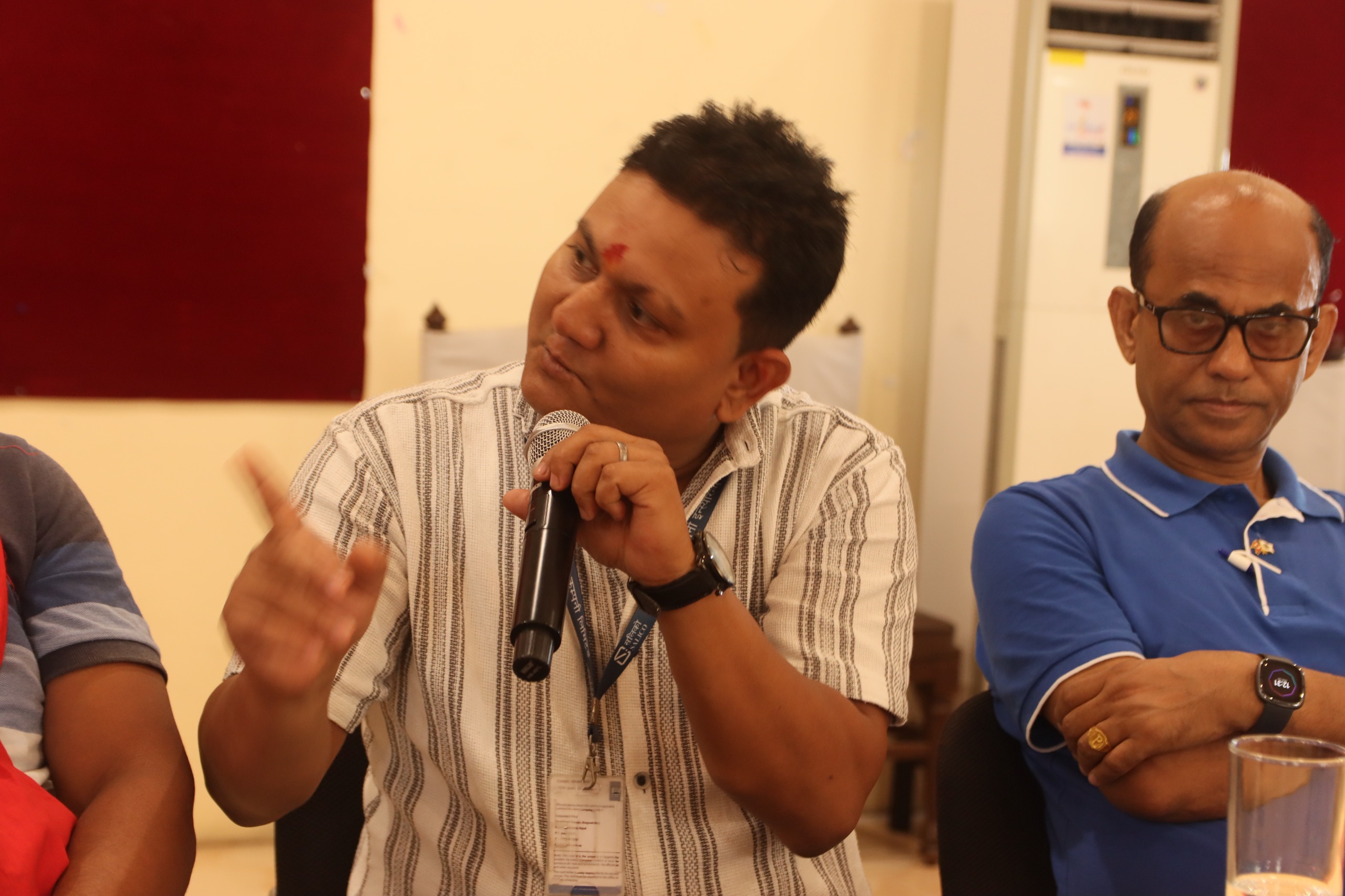
Similarly, representatives from the media committed to supporting the implementation of the new licensing system through continuous public awareness and responsible reporting. They expressed their commitment to disseminating accurate information on the new licensing procedures, road safety, and responsible driving practices, ensuring that e-rickshaw drivers and the wider public remain well informed about the reform.
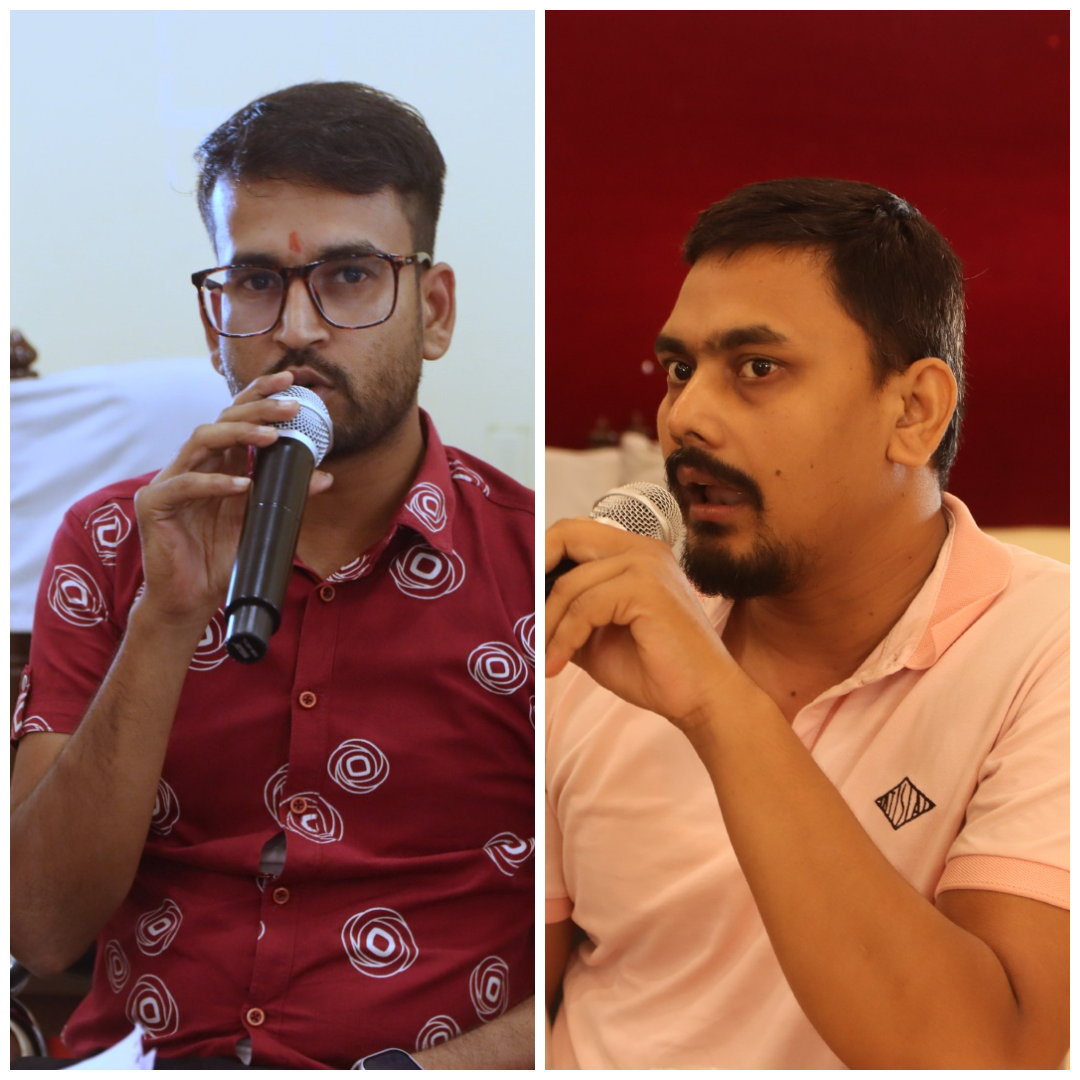
The dialogue concluded with a shared understanding that the recent policy reform marks only the beginning of the process. Participants agreed that its success will depend on sustained collaboration among government agencies, security institutions, local governments, civil society organizations, the private sector, media, and e-rickshaw associations. Through coordinated awareness, institutional support, and continued stakeholder engagement, the dialogue reinforced a collective commitment to ensuring that more e-rickshaw drivers obtain driving licenses, contributing to safer roads, improved passenger confidence, and a more organized and sustainable urban transport system in Madhesh Province.
Here’s the media coverage of the stakeholder dialogue:
https://esamachardainik.com/2026/07/20/7308/
https://nepalvani.com/2026/07/20/35378/
https://www.facebook.com/reel/916080714112486