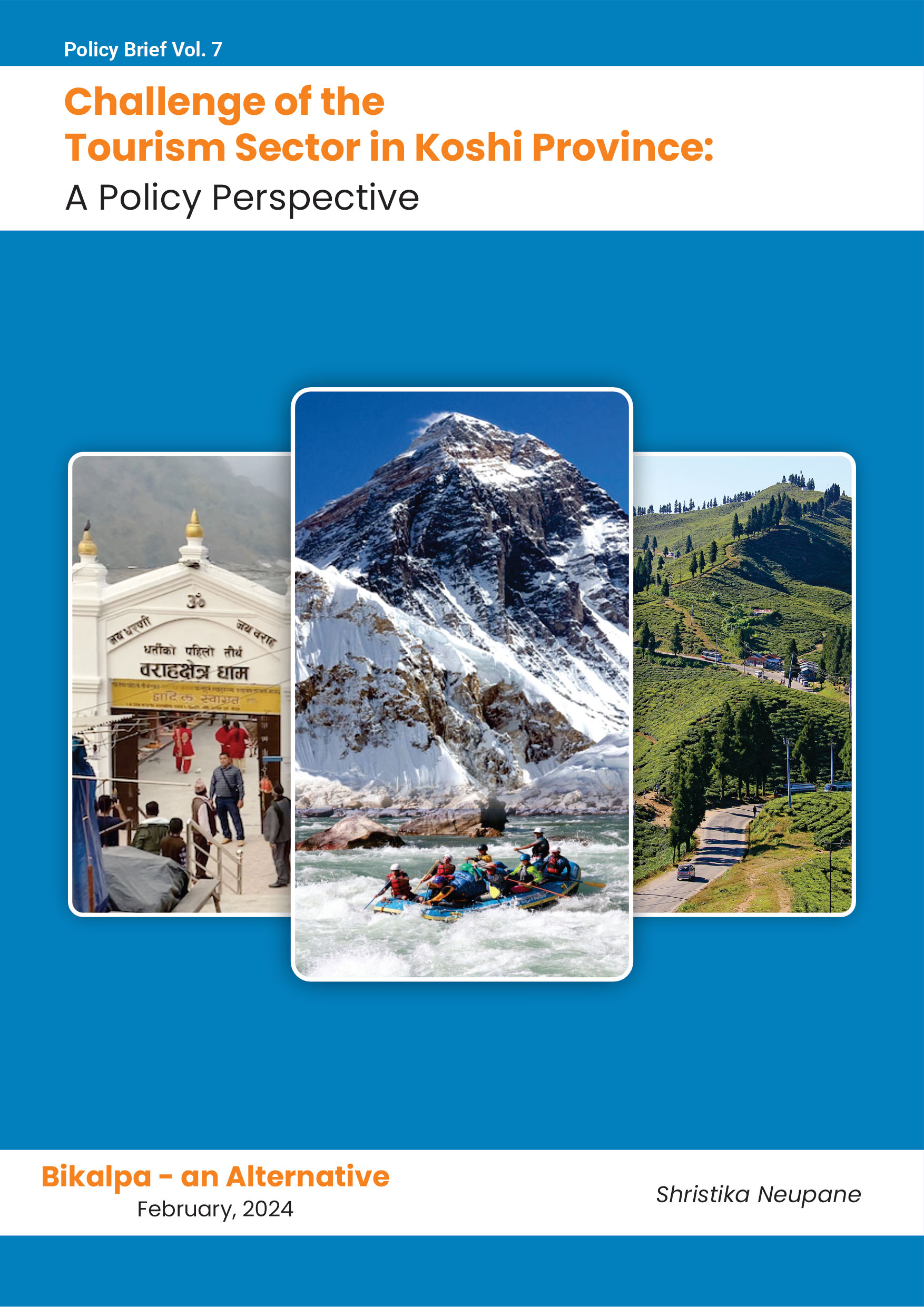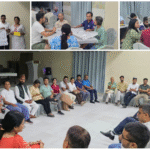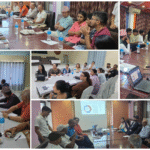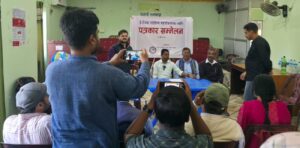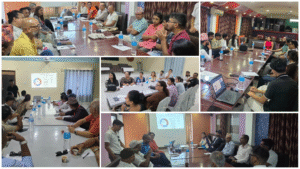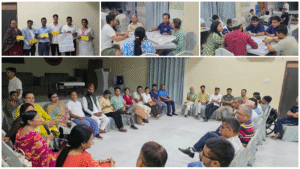

On 9 December 2025, Bikalpa, an Alternative organized a stakeholder dialogue to seek solutions for raising awareness among e-rickshaw drivers on obtaining driving licenses in Koshi Province. The meeting was held on the premises of the Ministry of Internal Affairs and Law of Koshi Province. The event was attended by 40 participants from diverse backgrounds, including policymakers, local government representatives, bureaucrats, e-rickshaw drivers, e-rickshaw associations, journalists, insurance and microfinance representatives, civil society members, e-rickshaw traders, and the Traffic Head.
The program was chaired by the Honorable Rewati Raman Bhandari, Minister of Internal Affairs and Law of Koshi Province, and facilitated by Mr. Basanta Adhikari, Founder and Executive Director of Bikalpa an Alternative. Mr. Adhikari shared the objectives of the event and highlighted the importance of e-rickshaws. He acknowledged their contribution to Nepalese society by creating job opportunities, supporting livelihoods, reducing dependence on petrol, and providing affordable and efficient services to approximately one million commuters daily.

Speaking about the challenges, Mr. Adhikari mentioned that in Koshi Province, around 80% of e-rickshaw drivers do not hold a driving license. According to government regulations, one must pass a written test to be eligible to appear for the practical test. However, for many illiterate e-rickshaw drivers, the written test poses a major barrier. Without passing it, they are unable to take the practical test and therefore remain unlicensed.
Taking this into consideration, the Koshi Provincial Government amended the Provincial Vehicle and Transport Management Regulation, 2082, which states that city rickshaw drivers in Koshi Province are no longer required to take a written examination to obtain a license; instead, they must undergo a verbal test. Despite this amendment, many e-rickshaw drivers are still not obtaining licenses. As a result, if accidents occur in the future, they will be unable to claim third-party insurance, may face imprisonment for being unable to provide compensation, and both commuters and drivers themselves will be at risk.
Mr. Adhikari urged all direct and indirect stakeholders to share responsibility in addressing this issue by creating awareness among e-rickshaw drivers about obtaining a driving license. He highlighted that the purpose of the meeting was to discuss solutions and share the respective roles that each stakeholder can play in raising awareness and motivating e-rickshaw drivers to obtain licenses. He also emphasized the importance of sharing collaboration opportunities among stakeholders to strengthen awareness efforts.
Following this, Mrs. Urmila Niraula, Under-Secretary at the Ministry of Internal Affairs and Law of Koshi Province, added that e-rickshaws indeed play an important role in job creation and in serving commuters. Recognizing their importance and the challenges they pose for traffic management, the Ministry amended the regulation and removed the written test requirement. She also noted that Help Desks have been established in every transportation office to support e-rickshaw drivers facing any difficulties. She then opened the floor for suggestions and solutions to address the issue.
After this, members of the e-rickshaw federation thanked the Ministry for the new regulation, the establishment of help desks, and its efforts to address the issue. They also requested e-rickshaw traders to encourage buyers to obtain a driving license at the time of sale. In addition, they urged the traffic police to check licenses, warn unlicensed drivers, inform them about the new regulation, and motivate them to obtain a license. They highlighted that many drivers are not even aware that operating an e-rickshaw requires a license and emphasized that it is high time to monitor whether underage or elderly individuals are driving.

Following this, civil society members emphasized the need for regular and effective traffic monitoring to ensure compliance with existing regulations. They suggested that when drivers are found operating without proper documentation, authorities should initially focus on informing and educating them about the legal requirements before imposing fines, in order to encourage voluntary compliance. They further proposed conducting population and route mapping to better assess the actual demand for e-rickshaws in different areas and to allocate designated routes where necessary for smoother traffic management.
In addition, civil society representatives expressed their commitment to organizing awareness programs at the community level, both independently and in collaboration with relevant stakeholders, to disseminate information about licensing requirements and safety regulations. One member raised a critical concern regarding the benefits and facilities available to e-rickshaw drivers after paying taxes and obtaining a license, questioning whether sufficient incentives currently exist. She highlighted that concerned authorities should provide tangible facilities, such as designated charging stations and other supportive infrastructure, exclusively for licensed drivers. Such measures, she noted, would not only support compliant drivers but also serve as a strong motivation for unlicensed drivers to obtain the necessary licenses.
Some stakeholders also suggested raising awareness among commuters by encouraging them to ask drivers whether they hold a valid driving license before using e-rickshaw services. They further proposed allocating routes on a district-wise basis. In addition, they recommended verifying citizenship documents to prevent underage individuals from driving e-rickshaws and strengthening monitoring in border areas. Regarding awareness, they emphasized that all stakeholders should be informed about the risks of operating without a license and that a robust awareness initiative must be implemented.
The event concluded with the final remarks of the Chairperson, Honorable Rewati Raman Bhandari, Minister of Internal Affairs and Law of Koshi Province. He highlighted the ongoing efforts and initiatives of the Ministry to address the challenges faced by e-rickshaw drivers. He mentioned that, in the future, the Ministry would take further effective steps to raise awareness among e-rickshaw drivers about obtaining licenses. He also urged all stakeholders to actively play their roles in creating awareness and motivating e-rickshaw drivers to obtain licenses.
Here’s the media coverage of the stakeholder dialogue:
https://bikalpakhabar.com/2025/12/5560/
https://koshisandesh.com/2025/12/09/130225/
https://arunkhabar.com/archives/12183