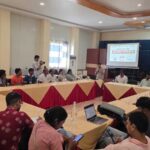
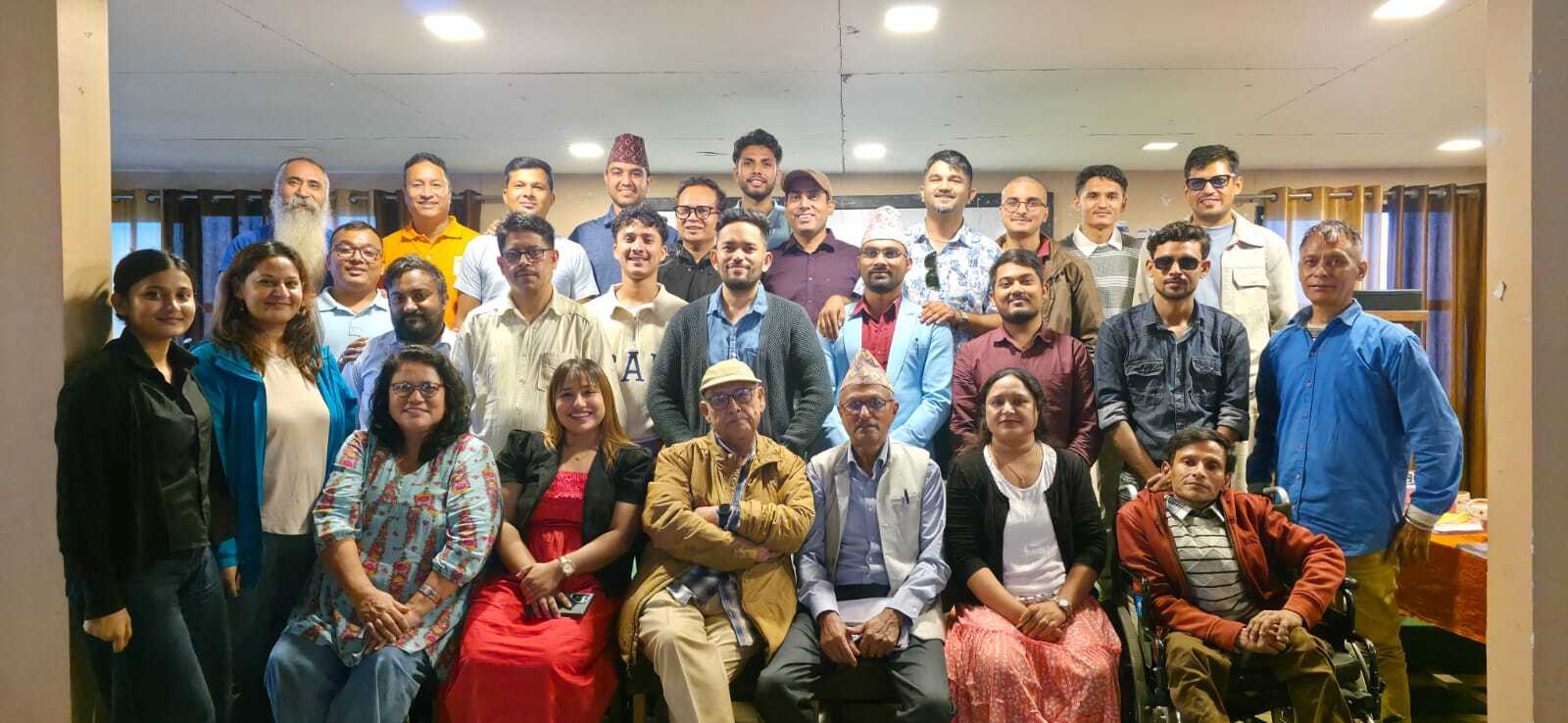
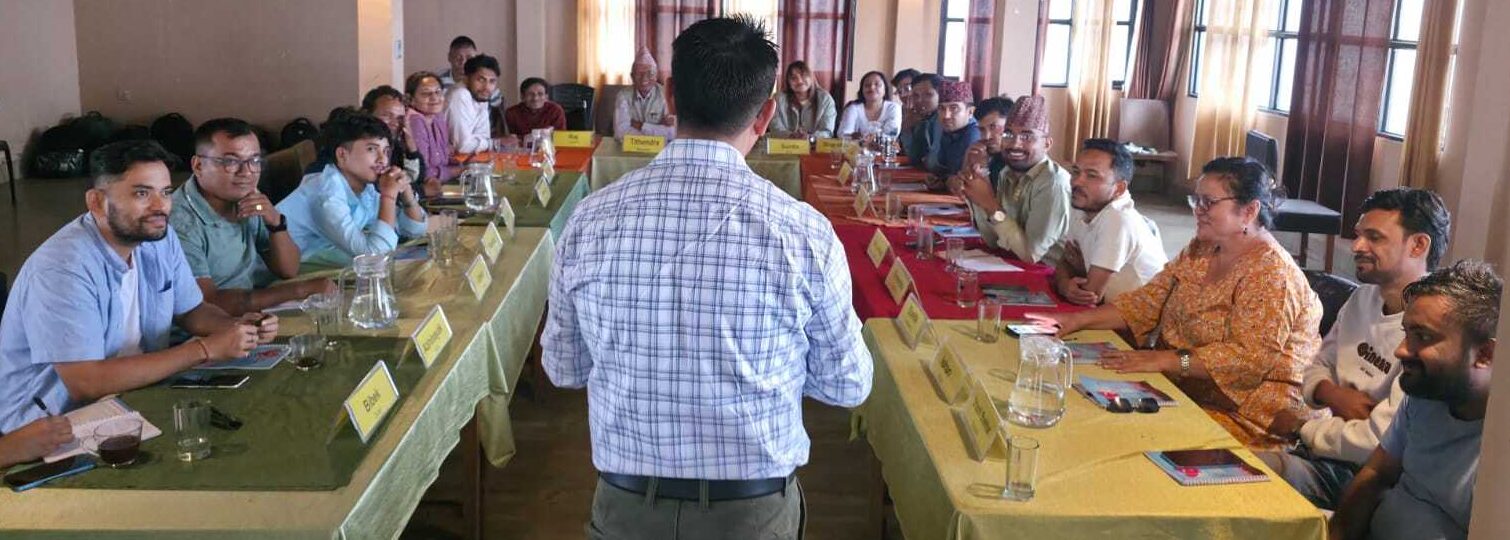
On October 3–4, 2026, Bikalpa – An Alternative organized a two-day Interactive Learning Workshop titled “Empowering Collaborative Leadership and Civic Engagement in Local Governance” in Bhedetar, Koshi Province. The workshop was organized as part of the process of establishing the Multi-Stakeholder Civic Engagement Advocacy Platform in Koshi Province under the United Nations Development Programme (UNDP) Nepal’s Advancing Civic Engagement for Democratic Participation Project.
Facilitated throughout both days by UNDP Consultant Yuvaraj Acharya, the workshop brought together diverse civic actors to reflect on collaborative leadership, civic participation, the relationship between citizens and public institutions, and the role of collective action in strengthening local governance. Building on the earlier consultations and coordination meetings conducted as part of the platform formation process, the workshop provided an opportunity for participants to deepen their understanding of civic engagement, examine different perspectives, and reflect on how a multi-stakeholder platform can contribute to more inclusive, responsive, and accountable governance in Koshi Province.
Day 1: Unpacking Generational Narratives, Historical Movements, and “Civic Deserts”
The workshop commenced with opening remarks setting the broader socio-political context. As UNDP Consultant Yuvaraj Acharya noted, rapid assessments conducted following recent youth-led movements revealed that the primary bottleneck in contemporary Nepalese governance is a deep disconnect in political and societal narratives. Acharya illustrated this generational gap through a vivid analogy of Swami Baba Ramdev delivering a sermon to a young child. While the Swami preached against eating meat because animals possess life, the child countered by asking why drinking bottle-gourd (lauka) juice was permitted if plants also possess life. The story highlighted how older leaders and Gen Z youth often operate from fundamentally different modes of learning, communication, and information processing. Senior generations were educated through rote memorization and book learning, whereas Gen Z processes information rapidly through digital media and expects immediate institutional responsiveness.
Acharya also highlighted when senior leaders fail to listen to youth voices and lack direct accountability, it creates explosive public frustration. This platform was created not as a traditional classroom, but as an intergenerational dialogue space where both generations can listen, understand, and jointly build the nation. He also stressed that when structured communication breaks down completely, both sides begin to dehumanize each other—a phenomenon he characterized as “monsterization”. When citizens only see leaders behind closed doors or in distorted media clips, empathy evaporates; direct, human-centered engagement restores mutual respect and shared accountability.
To address complex community challenges, Acharya used a local agricultural metaphor: mixing mustard, sesame, and millet. Historically, advocacy efforts in Nepal have been hindered by sectoral isolation—teachers communicate only with peers, business owners lobby exclusively for tax reforms, civil society organizations operate within rigid project silos, and youth organize online without connecting to local administrators.
By unifying these distinct sectors into a single platform, their complementary strengths merge to create a powerful collective impact:
Gen Z Youth & Students: Rapid mobilization, technological fluency, fresh perspectives, and unmatched messenger speed.
Senior Leaders & Academics: Decades of institutional wisdom, deep analytical judgment, and strategic patience.
Legal Professionals & Civil Society: Procedural expertise, rights-based frameworks, and structured advocacy.
Local Representatives & Administrators: Direct access to municipal decision-making and budgetary mechanisms.
To foster deep personal connections, participants paired up for a storytelling exercise. Each participant shared a specific instance where they took a personal risk or spoke up to advocate for someone else in society—ranging from saving an individual from suicide to defending marginalized neighbors against bureaucratic exploitation.
A central thematic focus of Day 1 was identifying and bridging “civic deserts”—marginalized geographic or social pockets where state-citizen communication is virtually non-existent. In these areas, citizens interact with the state primarily once every five years during elections through local political intermediaries. Government services and target group funds are frequently perceived as discretionary favors or charity rather than fundamental rights, leading to severe resource leakages where 100 rupees of central allocation trickles down to barely 60 rupees at the grassroots. The multi-stakeholder platform aims to enter these civic deserts, transforming passive, unengaged residents into empowered citizens capable of participating in ward-level budget planning and holding officials accountable.
In the afternoon session, participants engaged in a hands-on “Gallery Walk” exercise. Facilitators pasted poster boards representing major historical political turning points on the walls, asking participants to write sticky notes reflecting the positive gains, negative consequences, and citizen-state dynamics of each era. During the gallery debrief, participants traced how democracy in Nepal has evolved through three distinct paradigms:
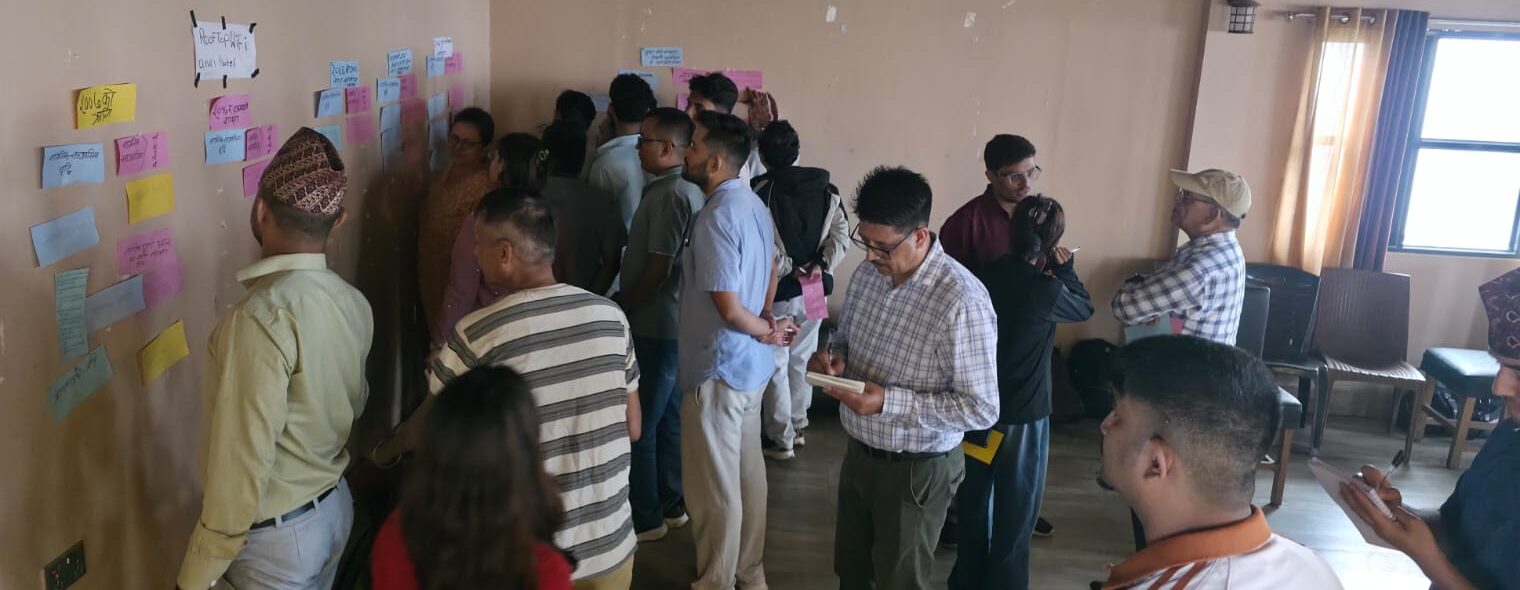
Representative Democracy 2046 BS : Citizens focused on electing representatives to govern on their behalf, based on liberal Westminister models.
Participatory Democracy 2062/63 BS & 2072 Constitution: Expanded constitutional spaces to mandate inclusive representation for women, Dalits, Janajatis, and Madhesis through cluster quotas and federal structures.
Accountable Democracy 2083 Gen Z Era: Driven by youth who recognize that physical inclusion alone is insufficient if decision-making is captured by elite nepotism (“nepo-babies”) and fiscal corruption
Today’s demand is for daily institutional integrity and responsive governance. Participants also noted how federalism acts as a mechanism for conflict localization. Rather than local grievances cascading to the central government in Kathmandu, local governments provide immediate avenues to resolve municipal disputes at the citizen’s doorstep.
Day 2: Platform Architecture, Strategic Methodologies, and Real-World Advocacy
Day 2 opened with a rigorous conceptual debate on the constitutional and legal distinction between Civic movements and mass revolutions. Individuals operating within defined constitutional and legal frameworks, actively exercising both their statutory rights and civic duties. Civic movements utilize constructive dialogue, evidence-backed petitions, legal reform, and institutional pressure to reform behaviors and policies. On the other hand, when institutional channels fail completely, public anger overflows into mass revolutions that possess the force to uproot political regimes and constitutional orders. Acharya emphasized that development organizations and multi-stakeholder civic platforms operate strictly within the realm of civic engagement and citizen empowerment, helping residents utilize constitutional guarantees to make local government responsive.
Translating this principle of constitutional civic action into practice, the platform executes a structured advocacy cycle designed to capture real grassroots needs: first, the unfiltered advocacy cycle begins with Youth Listening Labs (Bhanakusari), where trained youth facilitators visit organic public gathering spots—such as tea stalls, public parks, sports grounds, and community chautaris—to listen to ongoing public conversations without inserting pre-set agendas or interrupting. They capture unfiltered public anxieties regarding issues like local unemployment, municipal budget leakages, digital harassment, or public service delays.
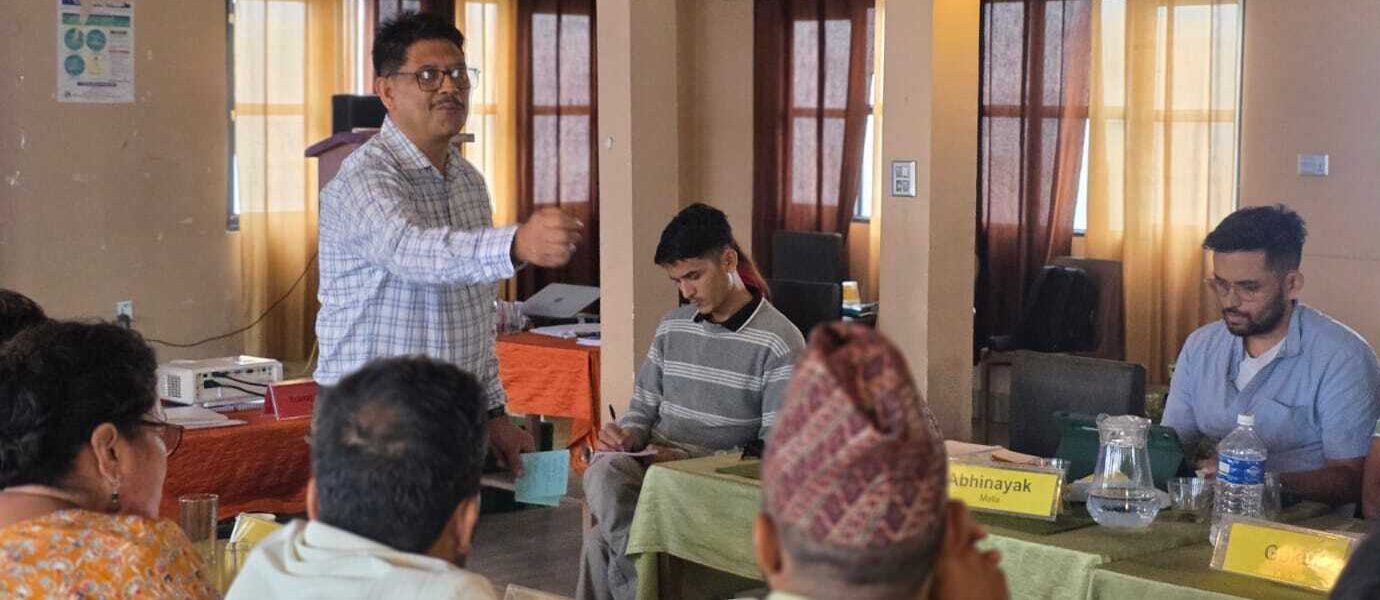
Next comes Synthesis Processing (Manthan), where this raw qualitative data is brought to an analytical table and systematically categorized into required interventions: behavioral change, policy reform, legislative amendment, or structural oversight. Out of dozens of raw complaints, top community priorities are distilled.
This leads to Platform Prioritization, where multi-stakeholder working groups select urgent, evidence-backed community issues. Following this, Evidence & Rapid Research involves youth researchers and academics gathering data and drafting brief policy briefs. Finally, the cycle culminates in Targeted Decision-Maker Outreach, actively engaging Ward Chairs, Mayors, and Provincial Representatives to drive concrete action.
The strength of Day 2 lay in the rich case studies shared by participants across sectors, demonstrating how collaborative civic advocacy works in practice:
Sharmila, representing the Feminist Dalit Organization (FEDO), shared critical insights regarding local Dalit women ward representatives. While constitutional mandates created space for one Dalit woman in every municipal ward committee, political parties frequently nominate illiterate or unprepared Dalit women to ensure they remain passive. In many instances, male relatives or party leaders write municipal budget proposals on their behalf. FEDO responded by establishing cross-ward Dalit women networks in Biratnagar and across Morang District, conducting quarterly legal and leadership workshops. As a result, municipal wards that previously allocated zero funds now possess dedicated, institutionalized budget lines for Dalit women’s capacity building and economic empowerment. According to Sharmila, FEDO Representative, Token representation without genuine capacity building is a political trap. Empowering women with knowledge ensures that local budget allocations are driven by community needs rather than male party bosses.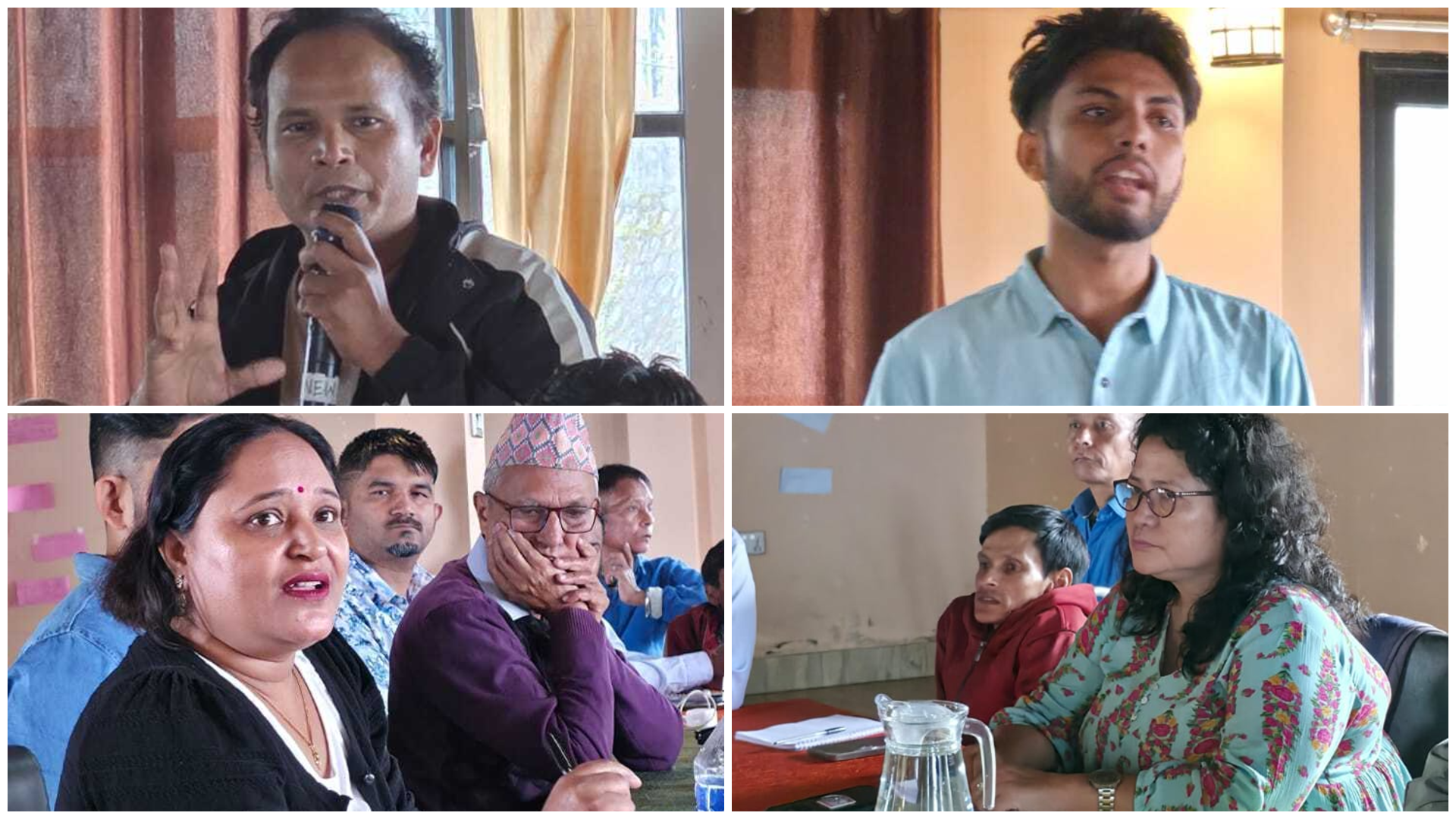 Mahesh Devkota , a 4th-year law student at Purbanchal University School of Law, presented a case study from a Clinical Legal Education (CLE) field deployment supported by UNDP’s Access to Justice project. A team of law students spent nearly a month conducting field research across all seven wards and nine secondary schools in Aathrai Rural Municipality, Tehrathum District.The study uncovered alarming rates of child marriage and widespread community misperceptions surrounding polygamy (many residents falsely believed polygamy laws applied only to men). The judicial committee lacked jurisdiction to try marriage offenses. Rather than issuing general complaints, the students compiled a rigorous, data-backed analytical report and presented it directly to Rural Municipality Chairman Harilal Singh. Impressed by the hard evidence, the rural municipality formally incorporated dedicated legal awareness and anti-child-marriage campaigns into its official annual fiscal budget.
The Chairman of Biratnagar Ward 11, Tirthendra Neupane, explained how his ward conducts public pre-budget consultations across 28 Tole Lane Organizations, incorporating community reviews to minimize post-implementation conflict.
Parwat portel, Representatives from RIDS Jhapa (currently in kantipur daily), described how their self-funded network transitioned from elite literature festivals to grassroots environmental policy dialogues held directly along the Mechi River bank (Dharti Aakash series), tackling illegal riverbed extraction alongside local workers and municipal authorities.
Sunita Chharahang, Representatives from the Cottage and Small Industries Women Entrepreneurs’ Committee highlighted that inside enterprise forums, party politics are completely set aside to focus exclusively on access to credit, market linkages, and municipal business registration barriers.
To avoid the common pitfalls of donor-dependent civic projects, senior civil society leaders—including Dinesh Sir from the Elite Club Biratnagar led a crucial debate centered on Platform Sustainability and Legitimacy. Participants unanimously agreed that the Koshi Multi-Stakeholder Platform must operate as a flexible, voluntary network hosted by Bikalpa as its secretariat, leveraging the existing institutional access and legal standing of its constituent members. This sustainability model relies on four core pillars: organic ownership, driven by voluntary participation and civic duty rather than daily meeting allowances or donor funds; legal and structural alignment, collaborating closely with municipal, provincial, and constitutional frameworks without losing independence; local resource mobilization, leveraging local CSOs, university researchers, and community spaces for continuous policy dialogues; and voluntary working groups, organized into specialized thematic clusters focusing on youth, women entrepreneurs, human rights, and inclusive governance.
Conclusion
The two-day Interactive Learning Workshop in Bhedetar successfully shifted the regional civic discourse from fragmented complaints to structured, collaborative action By uniting Gen Z activists, senior civic leaders, grassroots advocates, and duty-bearers under one banner, Bikalpa and UNDP Nepal have established a robust model for inclusive local governance in Koshi Province. As Koshi Province moves forward with this multi-stakeholder advocacy platform, the initiative stands as a promising model for strengthening democratic institutions from the bottom up—proving that when citizens listen, collaborate, and act together, responsive local governance becomes a reality.