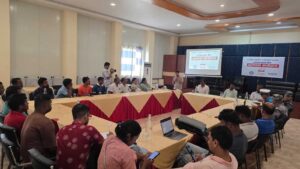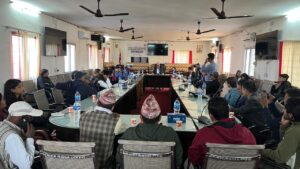

On 24th March 2026, Bikalpa – an Alternative, in collaboration with Kayapalat Nepal and the Nepal E-Rickshaw Workers Organization, Dhanusha, organized a press meet at the premises of the Federation of Nepali Journalists (FNJ), Dhanusha, Janakpurdham. The event was attended by around 14 journalists from various national and local media houses. The press meet aimed to highlight the growing challenges faced by thousands of e-rickshaw drivers who continue to operate without a C1 category driving license due to an impractical examination system, and to appeal to the media to raise the issue publicly and sensitize all relevant stakeholders.
The session was facilitated by Mr. Diwakar Uprety, Founder of Kayapalat Nepal, who outlined the relevance of the event and the urgency of confronting the challenges that threaten both the sustainability and safety of the growing e-rickshaw sector in Madhesh Province. He began by presenting survey data and infographics collected from e-rickshaw drivers across Janakpurdham and Birgunj, painting a stark picture of the licensing crisis. The data, gathered from over 311 drivers, revealed that approximately 70.7 percent of e-rickshaw drivers in Madhesh Province do not hold a valid driving license.
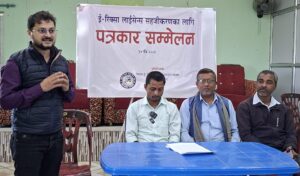
Adding to this, Mr. Basanta Adhikari, Founder and Executive Director of Bikalpa – an Alternative, elaborated on the core challenge behind these numbers. He explained that most e-rickshaw drivers come from low-income, low-literacy backgrounds, making the existing written examination system an insurmountable barrier. The mismatch between examination requirements and the educational reality of drivers has left the majority operating outside the legal framework — exposed to serious legal and financial consequences in the event of accidents, including the inability to claim insurance or compensation and the risk of imprisonment. Mr. Adhikari also drew attention to the broader economic significance of e-rickshaws, noting that the sector has emerged as a vital source of self-employment for a large number of people at a time when formal employment opportunities remain limited. He emphasized that while the sector has grown rapidly, regulatory systems have not evolved to keep pace with this change.
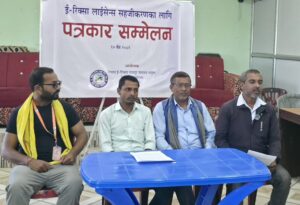
President Birendra Mahato, Secretary Santosh Mahara, and Advisor Jagdish Ray of the Nepal E-Rickshaw Workers Organization jointly raised their concern that although the ‘Madhesh Province Vehicle and Transport Management Act, 2081’ already includes a provision for issuing licenses through oral examination instead of written tests, the required regulations and working procedures have not yet been formulated, effectively preventing its implementation. As a result, transport offices continue to follow the old written examination system, leaving a large number of drivers without licenses and without legal protection. They appealed to the media to raise this issue consistently and to help sensitize both the public and policymakers, so that the livelihoods of thousands of low-income drivers and their families can be safeguarded.

The organization also presented the example of Koshi Province, which has already abolished the written examination and successfully introduced an oral and practical examination-based licensing system, as a model that Madhesh Province should urgently adopt. The speakers called on the concerned authorities to formulate the necessary working procedures without delay and to establish a clear legal framework for regulating e-rickshaw operations in the province.
The press meet concluded with a call to action — urging the government to complete the legal process swiftly and bring the oral examination provision into practice, in line with the commitment that Chief Minister Krishna Prasad Yadav had included in his 100-day action plan. The event received wide coverage from both national and local media, generating meaningful public attention around the issue.
As the press meet wrapped up, it was evident that the event had not only brought the licensing crisis into sharper focus but had also sparked a broader conversation about inclusion, livelihood protection, and the need for policy reform in the e-rickshaw sector. The press meet is expected to pave the way for sustained advocacy and meaningful reform in the days ahead.
Here’s the media coverage of the stakeholder dialogue:
https://shilapatra.com/detail/181671