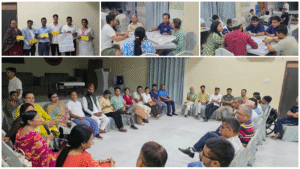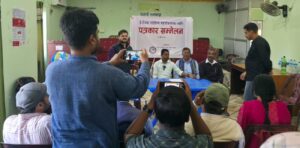
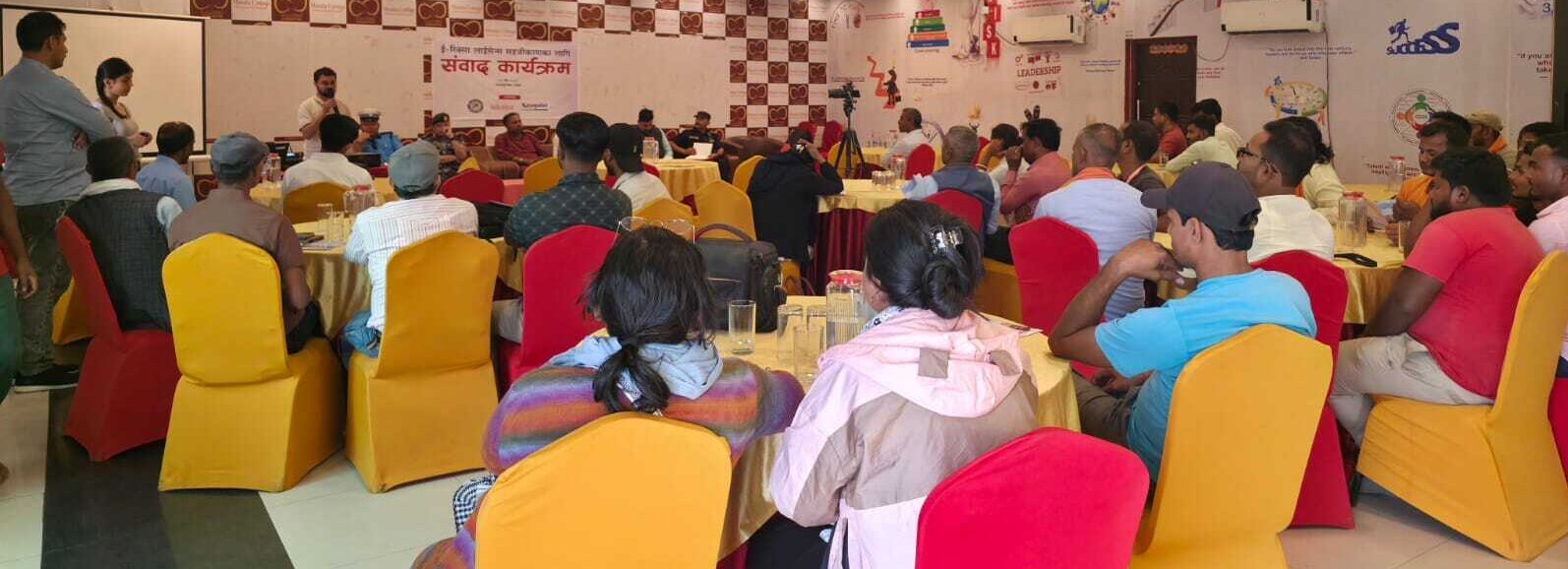
On 25th March 2026, Bikalpa – an Alternative, in collaboration with Kayapalat Nepal and the Nepal E-Rickshaw Workers Organization, Dhanusha, organized a Stakeholder Dialogue at Masala Cottage, Janakpurdham, Madhesh Province. The dialogue sought the implementation of the ‘Madhesh Province Vehicle and Transport Management Act, 2081’, with a specific focus on facilitating the process of obtaining a C1 driving license for illiterate e-rickshaw drivers in the province. The program brought together 57 participants from diverse backgrounds, including policymakers, local government representatives, bureaucrats, e-rickshaw drivers, e-rickshaw associations, journalists, civil society members, and the Traffic Head.
The program was chaired by Mr. Birendra Mahato, President of the Nepal E-Rickshaw Workers Organization, and facilitated by Mr. Diwakar Uprety, Founder of Kayapalat Nepal.
Mr. Basanta Adhikari, Founder and Executive Director of Bikalpa – an Alternative, opened the discussion by sharing two real-life incidents from Janakpur that illustrated the hardships faced by e-rickshaw drivers due to the lack of licensing and insurance access. He noted that approximately 70 percent of e-rickshaw drivers in the province do not hold a valid license, and that the primary reason is the written examination system, which is unsuitable for the large number of drivers who are illiterate. This mismatch between the examination requirement and the educational background of drivers has forced many to remain outside the legal framework. Mr. Adhikari highlighted the policy reforms introduced in Koshi Province, where the removal of written exams and the introduction of oral and practical tests have significantly increased license uptake, demonstrating that practical solutions are possible. He also appreciated the Madhesh Province Government for being the first province to include a provision for oral interview-based licensing for e-rickshaw drivers through the Madhesh Province Vehicle and Transport Management Act, 2081, while noting that the Act has yet to be implemented due to the absence of the required regulations and working procedures.
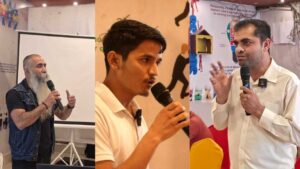
Following this, Bikalpa’s researcher Mr. Samir Chhetri presented the findings of a survey conducted among 311 e-rickshaw drivers in Birgunj and Janakpur. The survey revealed that 70.7 percent of e-rickshaw drivers do not hold a valid license, primarily because many are illiterate and unable to pass the written examination. Among those who attempt the licensing process, 48 percent fail the written exam. On average, 81.76 percent of drivers with no education or only primary-level education do not have a license. In contrast, among those who have completed secondary education, the rate of unlicensed drivers drops to 52 percent, indicating that the current written system disproportionately excludes low-education drivers, who make up 70.4 percent of all drivers surveyed. To address these gaps and formalize the e-rickshaw sector, Mr. Chhetri recommended the immediate formulation of regulations and working procedures, coordination with the federal government for software modification, practical trial standards tailored for e-rickshaws, control of middlemen, and mandatory orientation and training for drivers.
Mr. Rahul Jha, representative of the National Human Rights Commission, Madhesh Province, stressed the importance of active participation from all relevant stakeholders to ensure the rights of e-rickshaw drivers are protected. He noted that licensing should be equally mandatory for e-rickshaw drivers as it is for operators in other transport sectors and called for stronger coordination among concerned agencies to ease implementation.
Advisor Jagdish Ray of the Nepal E-Rickshaw Drivers Association emphasized that most e-rickshaw drivers come from low-income backgrounds and rely entirely on this work for their survival. The lack of accessible licensing leaves drivers feeling insecure on the roads and exposes them to legal and financial risks. He highlighted the need to simplify the licensing process along the lines of reforms already introduced in Koshi Province, so that drivers can work with confidence and access benefits such as insurance and legal protection. He urged the government to act swiftly in implementing an easy and inclusive licensing system.
Secretary Santosh Mahara of the Nepal E-Rickshaw Drivers Association highlighted that e-rickshaw drivers have organized themselves to sustain their livelihoods and contribute to keeping Janakpur clean and well-managed. However, drivers face serious difficulties particularly in the event of accidents due to the lack of licenses and insurance, which creates significant financial and legal vulnerability. He welcomed recent government assurances to simplify licensing through oral and trial-based systems and urged continued support so that drivers can work safely and securely.
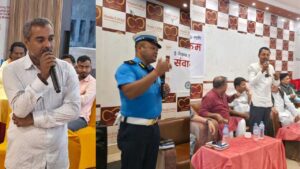
Dhanusha Traffic Inspector Surya Bahadur Shahi stated that the dialogue was aimed at securing stakeholder commitment to simplify e-rickshaw licensing. He noted that around 80,000 e-rickshaws in Madhesh Province support livelihoods across the region, but most drivers lack licenses, limiting their access to insurance and compensation. He emphasized that simplifying the licensing process would improve driver protection, road safety, and traffic management overall. While acknowledging that legal provisions are already in place, he pointed to procedural gaps and coordination delays with the federal system as the main obstacles to implementation. He reaffirmed the traffic police’s full commitment to supporting implementation once the necessary legal and technical systems are in place.
Addressing the program as the chief guest, Madhesh Province Minister for Labour and Transport, Mr. Manish Kumar Suman, affirmed that the provincial government is committed to making the driving license process simpler, practical, and accessible for e-rickshaw drivers. He informed participants that the government is preparing to replace the written examination with an oral and practical examination system for license distribution. He also mentioned that an initiative is underway to introduce a QR code-based system to further ease the process for applicants. Minister Suman emphasized that legal and technical reforms are necessary to regulate the growing use of e-rickshaws in the province and reaffirmed the government’s commitment to bringing drivers into the formal system.
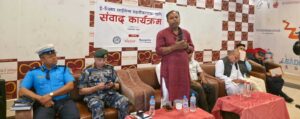
The program concluded with the closing remarks of chairperson Mr. Birendra Mahato, who reflected on the daily hardships faced by drivers due to the absence of valid licenses. He urged all concerned authorities to simplify the license distribution process without further delay, so that thousands of e-rickshaw drivers and their families can secure their livelihoods with dignity and legal protection.
Here’s the media coverage of the stakeholder dialogue:
https://gorkhapatraonline.com/news/198118
https://sajilopost.com/2026/03/25/51963/
https://www.facebook.com/share/v/1BCAVXYM9P/
https://www.facebook.com/reel/1201440498735199