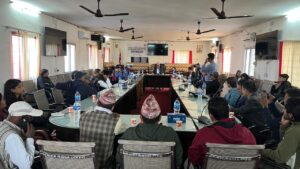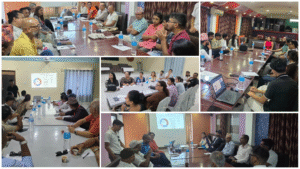
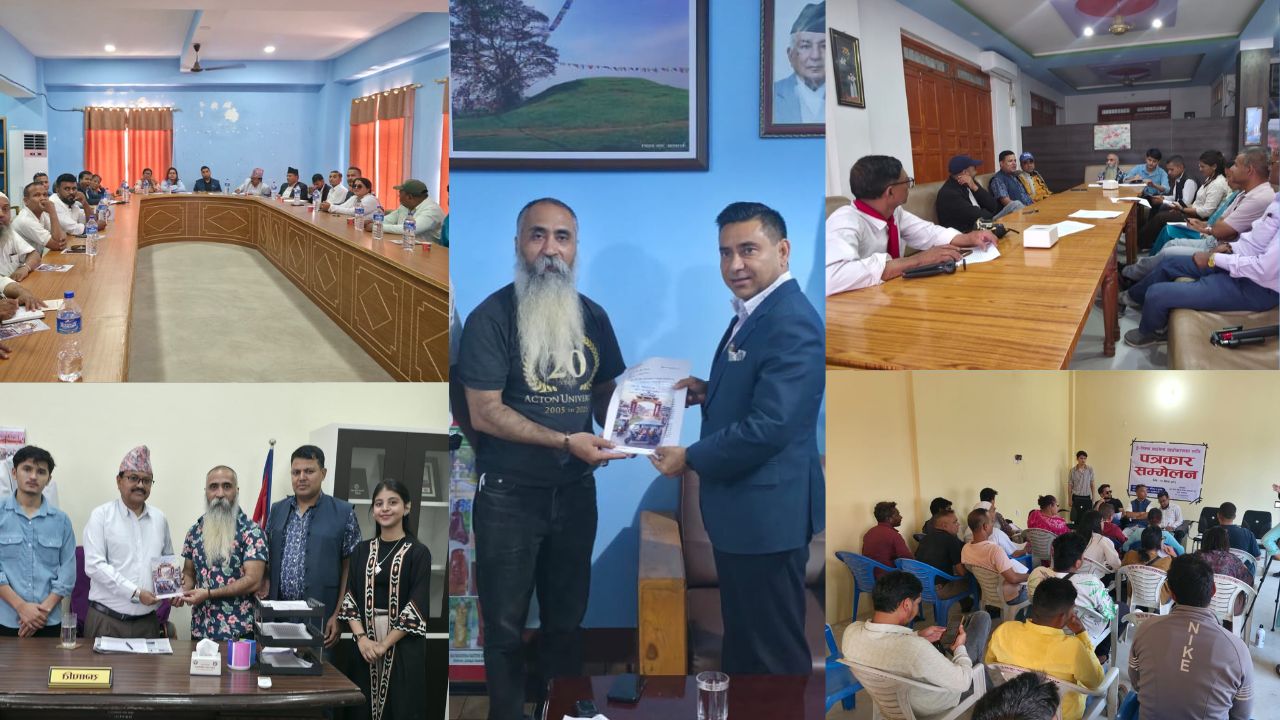
Building on the momentum of successful advocacy in Koshi and Madhesh Provinces, Bikalpa – an Alternative carried its campaign for e-rickshaw license reform to Lumbini Province in April 2026. What unfolded over six intensive days, from the 19th to the 24th of April, was one of the most impactful weeks of advocacy that Bikalpa has undertaken, encompassing high-level ministerial meetings, parliamentary engagements, a sticker campaign, two press meets, and a stakeholder dialogue that produced a concrete ministerial commitment to reform.
The licensing crisis for e-rickshaw drivers in Lumbini Province mirrors the pattern seen across other Terai provinces, but the scale of exclusion is striking. A survey conducted by Bikalpa – an Alternative in Siddharthanagar and Nepalgunj, with a sample size of 251 e-rickshaw drivers, revealed that 82.5 percent of e-rickshaw drivers in Lumbini Province operate without a license. The root cause is clear: 45.42 percent of all drivers surveyed are illiterate, and among this group, 93.86 percent do not hold a license. The written examination requirement, mandated under Section 21(1)(g) of the Road Transport, Traffic and Transportation Act, 2076 of Lumbini Province, which classifies e-rickshaws as small vehicles requiring a C1 license, has effectively become an impenetrable barrier for the majority of drivers who cannot read or write.
Operating without a license exposes drivers to serious legal and financial risks. In the event of an accident, unlicensed drivers face imprisonment, are unable to claim insurance, and have no legal recourse to seek or provide compensation. For families whose entire livelihood depends on the daily income of an e-rickshaw driver, these consequences can be devastating and irreversible.
Koshi Province has already demonstrated that reform is possible by amending its regulations in 2082 to replace the written examination with a mandatory 40-minute traffic orientation video followed by a practical trial test. Madhesh Province has taken a similar step, introducing oral and trial-based assessments for three-wheelers including e-rickshaw However, in practice, the issuance of licenses is still linked to coordination with the federal licensing software system, meaning implementation progresses once necessary technical alignment with the federal system is completed. These precedents provided a strong foundation for Bikalpa’s advocacy in Lumbini Province.
Bikalpa – an Alternative formally initiated its engagement in Lumbini Province on 19th April 2026 with a meeting with Mr. Lokmani Pandey, Spokesperson and Under-Secretary (Law) at the Ministry of Internal Affairs and Law, Lumbini Province. The team presented the survey findings and formally handed over a policy brief on e-rickshaw driver license reform. Mr. Pandey responded with a clear commitment to arrange a formal meeting with the Minister and Secretary of the Ministry of Industry, Tourism and Transport, bring the Parliamentary Committee to the table, and push the reform process forward. This administrative engagement set a constructive tone for the high-level meetings that followed.
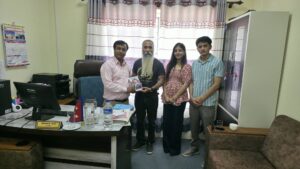
On 20th April 2026, Bikalpa – an Alternative met with Honorable Minister Prachanda Bikram Neupane of the Ministry of Industry, Tourism and Transport, Lumbini Province, and formally handed over the policy brief on e-rickshaw driver license reform. Minister Neupane acknowledged the concerns raised and took decisive action, instructing the Director of the Department of Labour and Transport to speed up the process and emphasizing that drivers should not be denied licenses solely due to a lack of formal education. Citing the examples of Koshi and Madhesh Provinces, the Minister indicated that the ministry is actively considering the necessary amendments to the Road Transport, Traffic and Transportation Act, 2076 of Lumbini Province. Importantly, Minister Neupane also accepted Bikalpa’s invitation to serve as Chief Guest at the upcoming Stakeholder Dialogue on 22nd April 2026.
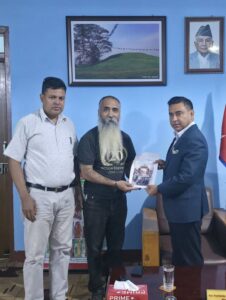
21st April 2026 was the most intensive day of the advocacy week, marked by a series of back-to-back meetings with senior officials and elected representatives across the Lumbini Province legislature and government.
The delegation began with a meeting with Honorable Ramji Prasad Ghimire, Chairman of the Physical Infrastructure and Development Committee, Lumbini Province, where Bikalpa submitted the policy brief and presented the scale of the licensing crisis. Chairman Ghimire expressed serious concern and affirmed his commitment to introducing the necessary amendments to the Road Transport, Traffic and Transportation Act, 2076 to replace the written examination requirement with an oral assessment or orientation-based approach.
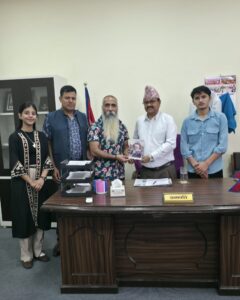
Later in the day, the team met Chief Minister of Lumbini Province, Honorable Chetnarayan Acharya, and formally submitted the policy brief. Chief Minister Acharya acknowledged that most e-rickshaw drivers are unable to pass written examinations due to low literacy levels, drawing a parallel with the more practical licensing approach already in place for tractor and power tiller operators. He expressed strong support for replacing the written exam with an oral or orientation-based assessment followed by a mandatory practical trial, in line with the models adopted in Koshi and Madhesh Provinces. He further directed officials from the Ministry of Industry, Tourism and Transport to study and adopt practices from other provinces and committed to moving the reform process forward through coordination with relevant authorities.
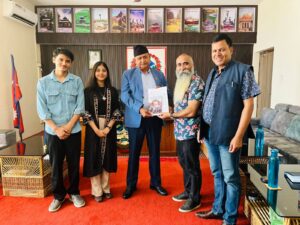
In a meeting with Mr. Narad Gautam, Provincial Secretary at the Ministry of Industry, Tourism and Transport, Bikalpa received one of the most encouraging signals of the day. Secretary Gautam confirmed that the provincial government is already aware of the issue and has prepared a draft reform proposal that has been forwarded to the Ministry of Law for approval. He indicated that the revised licensing system — replacing the written examination with an orientation and practical trial — is expected to be implemented in the near future, suggesting that the reform is already well in motion at the bureaucratic level.
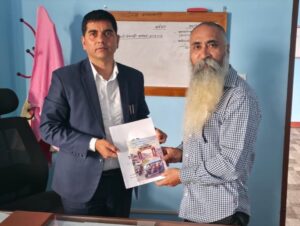
The delegation also met Honorable Dil Kumari Budha, Chairperson of the Provincial Affairs and Law Committee, Lumbini Province. After reviewing the policy brief, Hon. Budha responded firmly, stating that no e-rickshaw driver whose livelihood depends on daily wages should be denied a license solely due to illiteracy, and that the law must reflect the lived realities of these drivers. She committed to raising the issue in the Lumbini Provincial Assembly and pledged her support for amending the Road Vehicles, Transportation and Transit Act, 2076 to make it more inclusive and grounded in practical realities. True to her word, as the Provincial Assembly session commenced that same day, she advocated on the assembly floor for replacing the written examination requirement with an oral or orientation-based assessment.

Similarly, Honorable Ambika Kafle, Member of the Provincial Affairs and Law Committee, shared that she has been actively raising this issue for the past year with limited progress, and welcomed Bikalpa’s initiative as both timely and important. She carefully noted the key recommendations from the policy brief and promptly registered herself as a speaker for the Provincial Assembly session that day, delivering a strong intervention on the floor advocating for accessible licensing reform for e-rickshaw drivers.
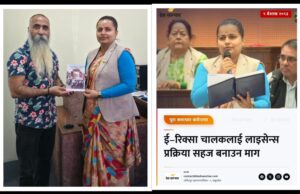
The delegation further met Honorable Khadga Basnet, Member of the Physical Infrastructure and Development Committee and former Minister of Industry, Tourism and Transport of Lumbini Province. Hon. Basnet shared that he had already pushed for this reform during his time as minister, following Bikalpa’s earlier engagement with him, but had been unable to complete the process before leaving office. He reaffirmed his commitment to continuing to support the cause from his current position and pledged to do whatever it takes to secure licenses for the large number of e-rickshaw drivers who need them.
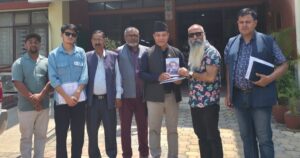
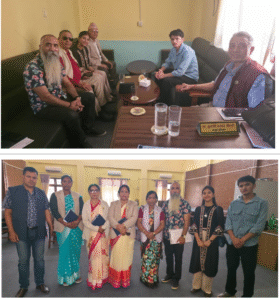
Rounding out the day’s engagements, Bikalpa held a series of informal discussions at the parliamentary party office of the Communist Party of Nepal (Unified Marxist–Leninist) in the Lumbini Provincial Assembly. The team engaged with Hon. Dilliraj Bhusal, Hon. Tulsi Ram Sharma, and Hon. Bhoj Prasad Shrestha, followed by a discussion with Hon. Basanti Neupane, Hon. Bhagwati Kumari Tharuni, Hon. Rekha Kumari Sharma, and Hon. Shanti Lodha. These conversations highlighted how the current licensing system excludes drivers who cannot pass written examinations due to illiteracy. Hon. Basanti Neupane shared a compelling case illustrating the severe consequences unlicensed drivers face, including imprisonment following accidents and ineligibility for insurance claims. Notably, Hon. Dilliraj Bhusal and Hon. Bhoj Prasad Shrestha accepted Bikalpa’s invitation and participated in the stakeholder dialogue held the following day.
On the same day, Bikalpa – an Alternative, in collaboration with the NGO Federation of Nepal, Lumbini Province, also organized a press meet at Hotel Delux Inn and Cafe in Rapti Valley, Deukhuri, Dang. The program focused on the rapidly expanding role of e-rickshaws in Nepal’s urban transport system and the urgent need for more inclusive and accessible licensing reforms. Speakers emphasized that e-rickshaws have become a vital source of income for thousands of families across the Terai region and a significant pillar of informal urban mobility at a time when domestic employment opportunities remain limited. Mr. Basanta Adhikari, Founder and Executive Director of Bikalpa, urged the media to actively bring this issue into public discourse and sensitize all relevant stakeholders. Eight journalists from diverse media organizations participated in the press meet and engaged in an active discussion on the challenges and possible policy solutions facing the sector.
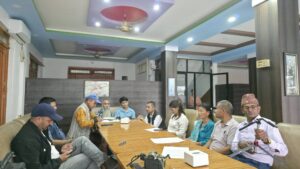
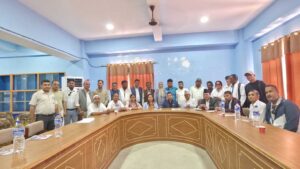
The stakeholder dialogue organized by Bikalpa – an Alternative in collaboration with the NGO Federation of Nepal, Lumbini Province on 22nd April 2026 brought together a wide and representative gathering of participants, including members of the Lumbini Province Assembly, chairpersons of parliamentary committees, senior bureaucrats from various ministries, representatives from the insurance sector, e-rickshaw drivers from Nepalgunj and Butwal, e-rickshaw traders, unlicensed driver victims, and members of the media.
The Chief Guest of the event, Honorable Minister Prachanda Bikram Neupane of the Ministry of Industry, Tourism and Transport, Lumbini Province, delivered a significant announcement at the dialogue. He stated that the ministry has already drafted amendments to the Road Vehicles, Transportation and Transit Act, 2076 and assured participants that the proposed amendment will introduce a major reform by replacing the written examination with an orientation-based and practical assessment system for e-rickshaw drivers. Minister Neupane further indicated that the ministry aims to begin issuing licenses under this revised system within one month, a commitment that was received as a concrete and time-bound milestone by all participants. The dialogue was considered an important milestone in aligning provincial policy reform with the lived realities of e-rickshaw drivers and in strengthening coordination among the government, transport stakeholders, and civil society.
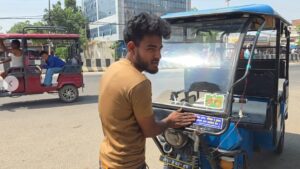
On 23rd April 2026, Bikalpa – an Alternative took the advocacy campaign directly to the streets of Nepalgunj through a targeted sticker campaign among e-rickshaw drivers. Stickers promoting awareness about the ongoing licensing reform, the oral examination system being advocated for, and expressions of solidarity with the campaign were distributed to and displayed on e-rickshaws across the city. The campaign served as a visible and grassroots expression of the movement, turning the vehicles themselves into mobile platforms for advocacy. By reaching drivers directly on the ground, the sticker campaign helped build a broader sense of ownership and participation among e-rickshaw drivers who are the primary beneficiaries of the reform effort.
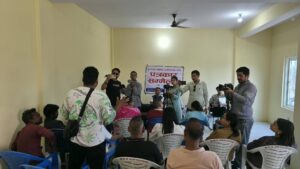
On 24th April 2026, Bikalpa – an Alternative, in collaboration with Nepalgunj E-Rickshaw Management Pvt. Ltd., organized a press meet at the premises of the Journalist Federation, Nepalgunj. Around 14 journalists from diverse national and local media organizations participated in the event. Mr. Basanta Adhikari, Founder and Executive Director of Bikalpa – an Alternative, along with representatives of Nepalgunj E-Rickshaw Management Pvt. Ltd., addressed the journalists and presented the scale of the licensing crisis faced by e-rickshaw drivers in the region. The speakers highlighted the findings of Bikalpa’s survey, the legal provisions already in place but yet to be implemented, and the concrete commitments made by provincial government leaders over the course of the preceding week. The media was urged to continue amplifying the issue and to hold the government accountable for delivering on its stated commitments. The event received coverage from both national and local media, further strengthening the public momentum around the reform campaign.
The six days of advocacy in Lumbini Province — spanning administrative meetings, ministerial and parliamentary delegations, two press meets, a sticker campaign, and a major stakeholder dialogue — produced outcomes that are rare in such a compressed period of time. The provincial government has already prepared a draft reform proposal forwarded to the Ministry of Law for approval, two assembly members spoke on the floor of the Provincial Assembly on the same day as their meeting with Bikalpa, the Chief Minister has directed officials to adopt the models of Koshi and Madhesh Provinces, and the responsible minister has publicly committed to implementing the new licensing system within one month.
Bikalpa – an Alternative will continue to closely monitor the implementation of these commitments and remain engaged with provincial authorities to ensure that the reform translates into real and lasting change.