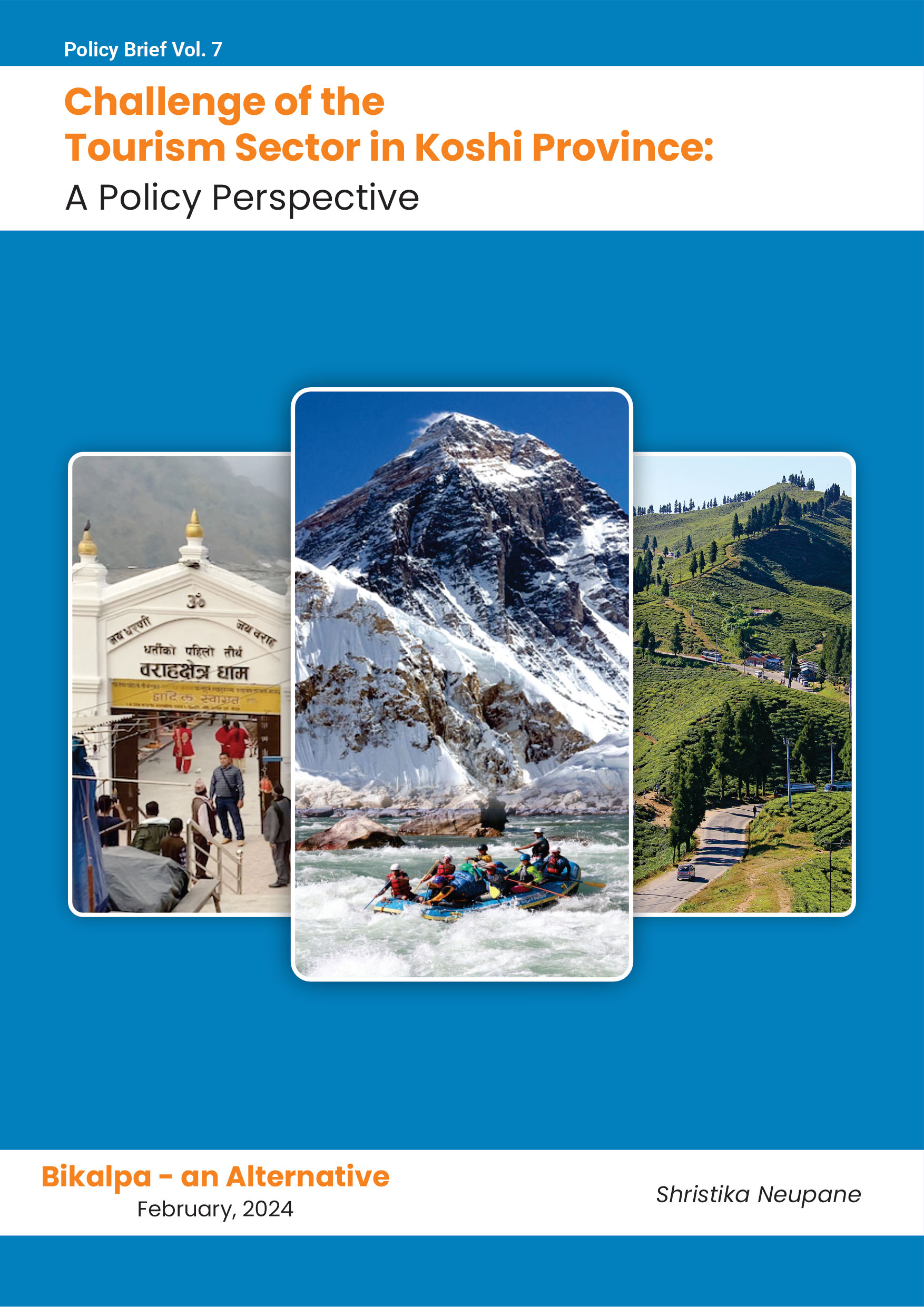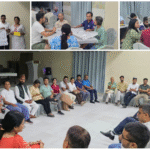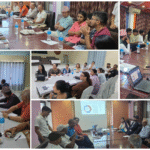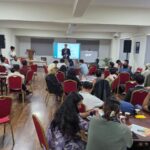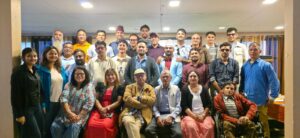
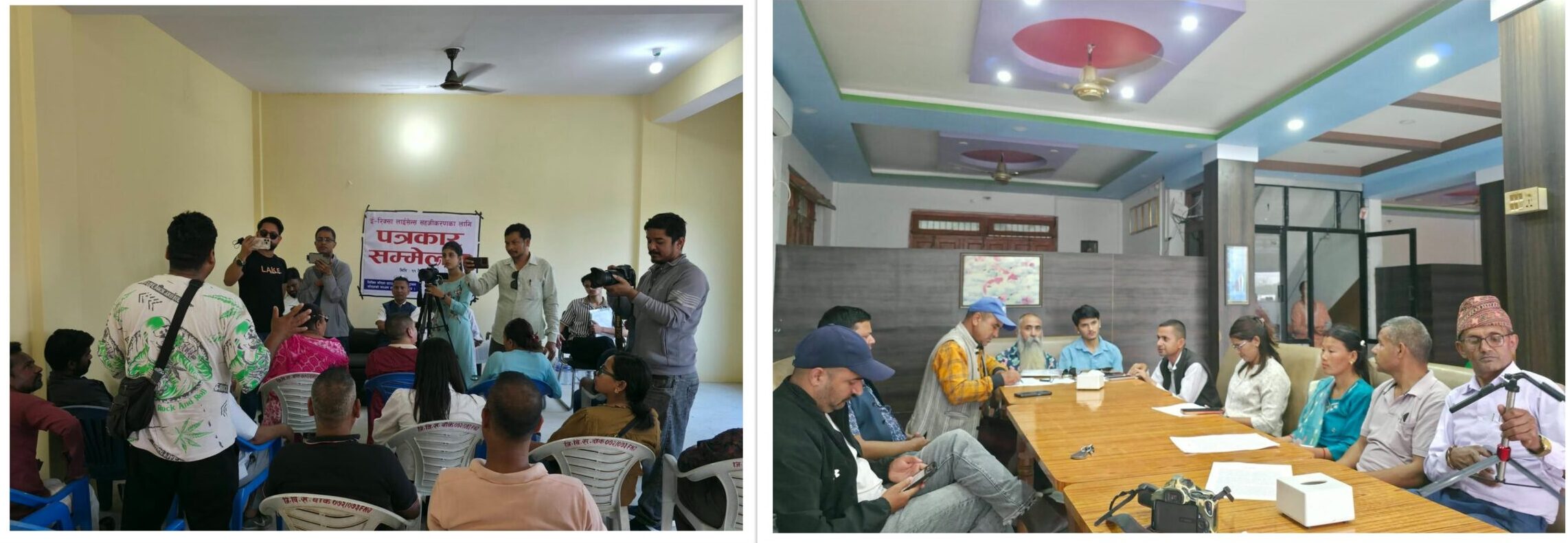
In April 2026, Bikalpa – An Alternative, in collaboration with NGO Federation of Nepal, Lumbini Province, and Nepalgunj E-Rickshaw Management Pvt. Ltd., organized a series of press meets to bring wider public and media attention to the urgent need for inclusive e-rickshaw licensing reforms. These engagements in Dang and Nepalgunj aimed to amplify evidence-based advocacy and mobilize media support around a critical livelihood issue affecting informal transport workers.
Press Meet in Rapti Valley (Deukhuri), Dang
On 21 April 2026, a press meet was held at Hotel Delux Inn and Cafe in Rapti Valley (Deukhuri), Dang. The program focused on the rapidly expanding role of e-rickshaws in Nepal’s urban transport system and the urgent need for more inclusive and accessible licensing reforms.The event was attended by around 8 journalists from various national and local media houses.
The session was facilitated by Keshab Bhusal, provincial project coordinator NGO Federation of Nepal, lumbini province. In his facilitation, Bhusal emphasized that the issue of e-rickshaw licensing is not merely a regulatory concern but a livelihood and social justice issue. He highlighted how a large number of drivers, particularly those from low-income and low-literacy backgrounds, are systematically excluded from the formal licensing system due to rigid written examination requirements.
Bhusal also stressed the need for coordination between government, civil society, and the media to push forward practical reforms. He also underscored the role of the media in amplifying the voices of marginalized drivers and ensuring that policy commitments translate into real change.
Director Basanta Adhikari further discussed that e-rickshaws have become a vital source of income for thousands of families across the Tarai and urban regions of Nepal. In a context where foreign employment continues to dominate due to limited domestic job opportunities, e-rickshaws are playing a crucial role in reducing unemployment by creating self-employment opportunities at the local level. He emphasized that the sector is not only an economic lifeline but also a key pillar of informal urban mobility. He further added that e-rickshaw ownership has empowered many drivers to become “owners of their own work,” improving dignity and financial independence.
During the event, Director Basanta Adhikari urged the media to actively bring this issue into public discourse and sensitize relevant stakeholders. He stressed that immediate policy attention is necessary to protect the livelihoods of thousands of low-income drivers and their families, who remain vulnerable due to gaps in licensing and regulatory frameworks.
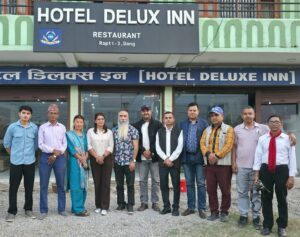
The press meet concluded with a strong call to action, urging amendments to the Road Vehicles, Transportation and Transit Act, 2076 (सडक सवारी, यातायात तथा परिवहन ऐन, २०७६) and implement an inclusive licensing system that replaces the written examination with orientation-based and practical assessments.
Press Meet in Nepalgunj
Building on this momentum, on 24 April 2026, Bikalpa – An Alternative, in collaboration with Nepalgunj E-Rickshaw Management Pvt. Ltd., organized another press meet at the premises of the Journalist Federation in Nepalgunj. The event brought together around 14 journalists from both national and local media outlets.
During the session, Basanta Adhikari, Founder and Executive Director of Bikalpa – An Alternative, along with representatives from collaborating partners, briefed the media on the scale and urgency of the licensing crisis affecting e-rickshaw drivers in the region.
The event amplified strong voices from the ground, where e-rickshaw drivers and representatives from the Auto Tempo and E-Rickshaw Entrepreneurs Association, Banke, highlighted a critical challenge: the majority of drivers are illiterate and therefore unable to pass the mandatory written examination required for licensing. They collectively called for alternative licensing mechanisms, such as oral assessments or simplified systems that better reflect their realities. Participants pointed to successful policy examples from other provinces, particularly Koshi Province’s model of mandatory traffic orientation followed by a trial test, and Madhesh Province’s provision for oral and trial-based licensing, as practical and proven solutions that Lumbini Province could adopt.
During the interaction, a representative from the drivers’ association shared that in a recent meeting, Honorable Minister Prachanda Bikram Neupane had committed to introducing necessary legal amendments within one month, incorporating alternatives to the written exam. The discussion was further deepened by a powerful first-hand account from an unlicensed driver, who explained how illiteracy had prevented him from obtaining a license, leaving him exposed to serious legal risks, including possible imprisonment in the event of an accident, and exclusion from insurance claims. More than 96% of e-rickshaw drivers in Nepalgunj operate without licenses, insurance claims remain inaccessible without valid documentation, and drivers often face severe financial and legal consequences if they are unable to compensate accident victims. Media representatives, including leadership from the Journalist Federation, stressed the importance of maintaining road discipline while also supporting the introduction of an inclusive licensing system for illiterate drivers.
In closing, Director Basanta Adhikari emphasized that implementing these reforms would not only improve road safety but also secure the livelihoods of thousands of drivers and their families, while ensuring better protection for passengers through a more functional and accessible insurance system.
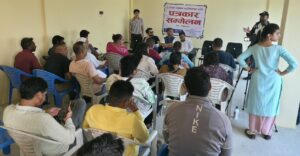
Journalists were encouraged to continue highlighting the issue and to hold authorities accountable for their commitments toward reform. The event received coverage across local media platforms, helping to build broader public awareness and momentum for policy change.
The press meets in Dang and Nepalgunj played a critical role in amplifying both evidence and lived experiences. By connecting policymakers, media, and affected communities, Bikalpa – An Alternative and its partners strengthened the call for a licensing system that reflects the realities of Nepal’s informal workforce.
Here’s the media coverage of the stakeholder dialogue:
https://gorkhapatraonline.com/news/202866
https://kohalpurtimes.com/2026/38737/
https://deukhuritoday.com/archives/67214
https://www.facebook.com/share/v/18cukQkrj4/
https://www.facebook.com/share/v/14dugFDeceV/