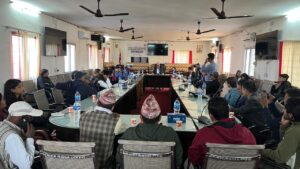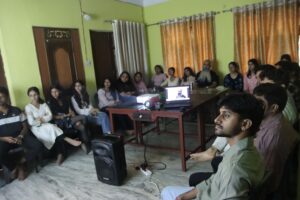
On 14th February 2026, Bikalpa and Kayapalat team met e-rickshaw association members of Dhanusha district with the aim to discuss the collaboration opportunities and activities that can be done to ease the license obtaining process for the drivers. While discussion, the attendees highlighted the limitations to conduct symbolic protest, stakeholder dialogue and press releases due to upcoming election on 5th March 2026 and its code of conduct. So, the discussion concluded to organise sticker street campaign and one to one meetings with ministers, policy makers and relevant stakeholders before election and conduct further activities after election.
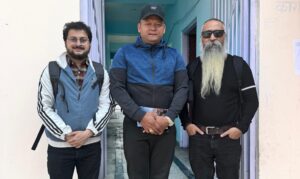
On the same day, following the discussion with the e-rickshaw association, the teams from Bikalpa and Kayapalat met, Inspector Surya Bahadur Shahi to exchange ideas on addressing the challenges related to obtaining licenses and ensuring that the maximum number of e-rickshaw drivers in Madesh Province secure valid licenses. Inspector Shahi acknowledged the need to advocate for a policy change, particularly the removal of the written test requirement. He noted that strict license checks cannot be effectively implemented at present, as many e-rickshaw drivers do not hold licenses. Conducting inspections under current conditions could lead to street congestion and disrupt the daily earnings of drivers. Therefore, he emphasized that strict monitoring should only begin after creating a more enabling environment that allows drivers to obtain licenses more easily. He further stated that once the written test requirement is removed, authorities can more effectively enforce license checks. This would also help address concerns regarding Indian citizens operating e-rickshaws, as the issue would be better managed when Nepali drivers can obtain licenses more easily. Additionally, he highlighted collaborating with college students, Kayapalat, and Bikalpa in future to conduct awareness programs and campaigns following the policy change, encouraging e-rickshaw drivers to obtain licenses. At last, he mentioned that he’ll be following and replicating best practices from Koshi Province.
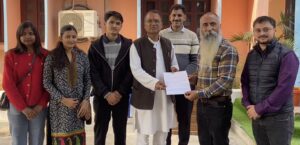
On 15th February 2026, in a collaborative effort between Bikalpa-an Alternative and Kayapalat Nepal, a delegation meeting with the Honorable Speaker of the Madesh Province Assembly, Mr. Ram Ashish Yadav was held to seek legislative support for the formalization of the e-rickshaw sector. The discussion focused on the urgent need for a simplified licensing framework that accommodates the socio-economic realities of the province’s drivers. The Speaker acknowledged the delegation’s concerns regarding the impracticality of written exams for illiterate operators and expressed his support for provincial regulations that prioritize practical skills and oral assessments. By aligning the provincial assembly’s legislative oversight with the ongoing efforts of the Ministry and the Chief Minister, Mr. Yadav emphasized his commitment to ensuring that the Madhesh Province Vehicle and Transport Management Act is implemented in a way that protects local livelihoods, ensures public safety, and upholds the rights of the thousands of drivers seeking to enter the formal economy.
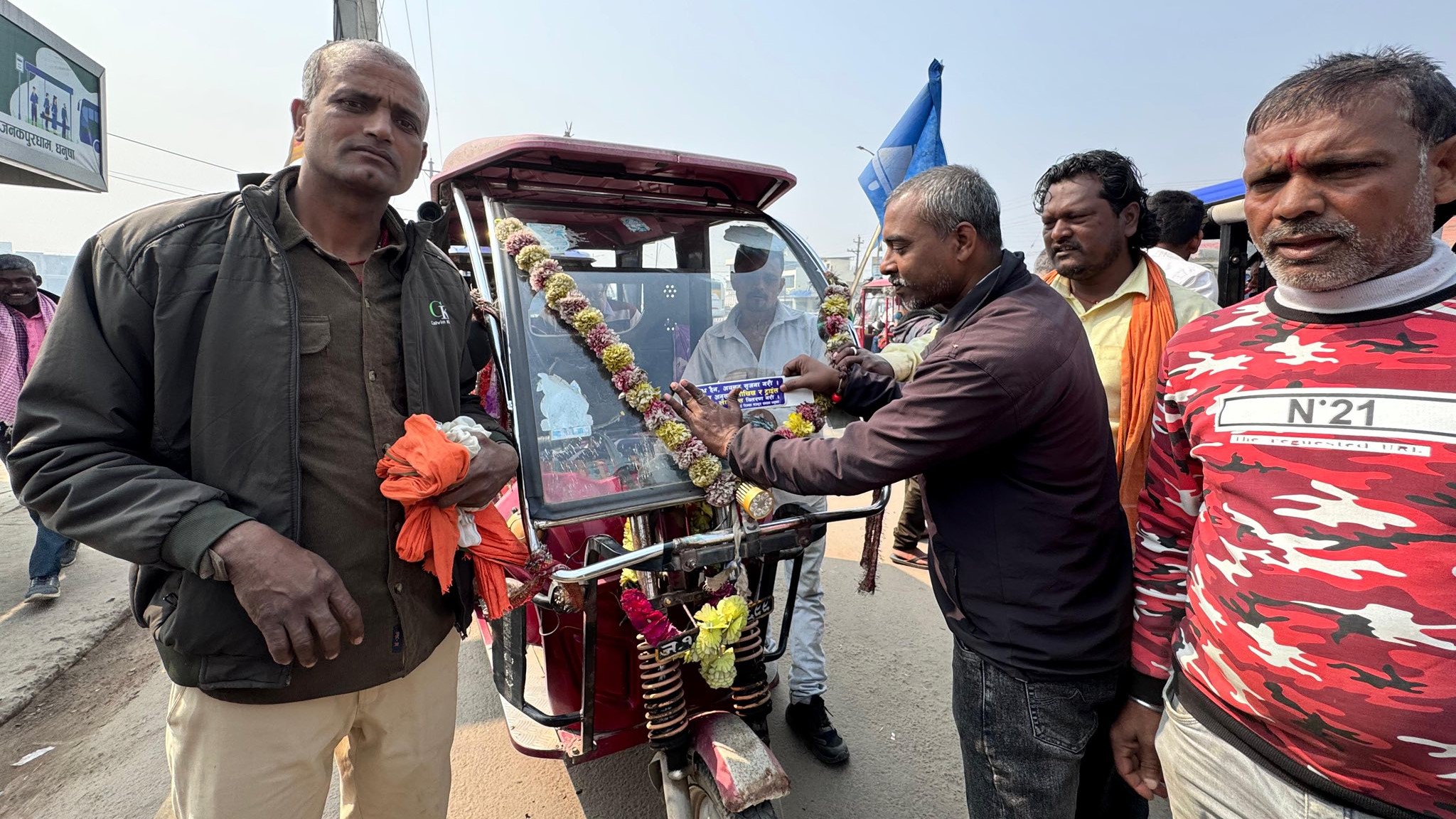
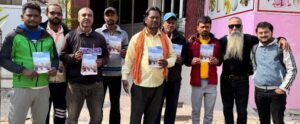
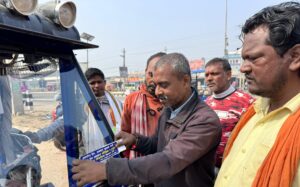
Following the meeting discussion held on 14th February 2026, among e-rickshaw association, Bikalpa and Kayapalat team, E-rickshaw association in Dhanusha have initiated a “sticker campaign” to make the driving licence process easier and more accessible. The campaign was carried on 15th and 16th February in collaboration with Bikalpa, Kayapalat, and the Nepal E-rickshaw Workers Organization, Dhanusha with aim to aware e-rickshaw drivers to demand accessible license obtaining process. Although the Madhesh Province Government has issued its own “Madhesh Province Vehicle and Transport Management Act–2081,” it has still failed to develop the necessary regulations and procedures required for implementation. Even though the Act clearly allows an oral examination option for e-rickshaw drivers, transport offices continue to follow the old written examination system due to the absence of a proper working procedure and continued dependence on the federal software system. As a result, drivers who participate in the licence process fail the written exam, leaving a large number of e-rickshaw operators without licences. Mr. Basanta Adhikari, founder of Bikalpa an Alternative stated that the campaign was launched as a form of warning and pressure to the provincial government to resolve these issues, especially since thousands of e-rickshaws are operating without licences that lead risks in case of accidents. Similarly, the organization’s secretary, Santosh Paswan, emphasized that a licence is both a right and a responsibility, but the written exam has become a major barrier for illiterate and less-educated drivers. He explained that the campaign aims to simplify and systematize the licensing process, spread awareness, and promote e-rickshaws as a safe and reliable mode of transport. So far, around 600 e-rickshaws have had stickers placed on them. Mr. Diwakar Upreti, founder of Kayapalat said the campaign will continue while also pushing for policy-level implementation, including applying lessons from the licensing practice already introduced in Koshi Province.
Following the discussion with the e-rickshaw association on 14th February 2026, Bikalpa an Alternative and Kayapalat team collaboratively, went for a delegation submission to the Chief Minister of Madhesh Province, Mr. Krishna Prasad Yadav, to advocate for urgent reforms in the e-rickshaw licensing system. During the discussion, the delegation highlighted how the current written examination acts as a prohibitive barrier for the majority of drivers who are uneducated, leaving them unlicensed and vulnerable to legal consequences. To address this, the policy brief proposes a transition to oral-based examinations to ensure that illiterate yet skilled drivers are not deprived of their right to a livelihood. Chief Minister Yadav expressed his firm commitment to the issue, confirming that the provincial government is currently drafting the necessary working procedures to implement oral-based license distribution shortly, ensuring the sector is both formalized and inclusive.
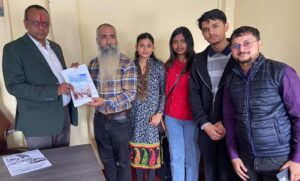
Following the discussion with the e-rickshaw association on 14th February 2026, Bikalpa an Alternative and Kayapalat team collaboratively had a delegation meeting with Mr. Ranjit Kumar Yadav, Officiating Secretary of the Ministry of Sports and Social Welfare Madhesh Province, to discuss the implementation of the Madhesh Province Vehicle and Transport Management Act–2081. A central pillar of this policy brief is the formalization of the province’s 82,000 e-rickshaw operators by replacing traditional written exams with oral and trail-based testing, mirroring the simplified licensing used for tractors and power tillers. Mr. Yadav emphasized provincial autonomy and revenue retention, advocating for a decentralized system that keeps registration fees within the “local pocket” rather than centralized hubs like Bagmati. To bypass federal bureaucratic and software delays, the ministry is finalizing a localized “Work Procedure” (Karyabidhi) aimed at launching an efficient, digitized licensing system within the next month and a half to secure local livelihoods and streamline service delivery.
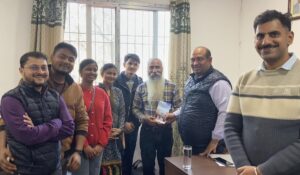
Following the discussion with the e-rickshaw association on 14th February 2026, Bikalpa an Alternative and Kayapalat team collaboratively had a delegation meeting with the Chief District Officer (CDO) of Dhanusha, Mr. Prem Prasad Luintel, to address the critical hurdles in e-rickshaw licensing within Madhesh Province. This discussion highlights the CDO’s concerns regarding jurisdictional confusion and the financial burden of double registration at both municipal and provincial levels, advocating for a streamlined system based on successful models from Koshi Province. Mr. Luintel proposed that following the March 5 elections, new regulations should be enforced through a “green and red sticker” campaign, utilizing student volunteers and traffic police to clearly distinguish between licensed and unlicensed vehicles. By simplifying the licensing process and strictly enforcing citizenship requirements, the initiative aims to formalize the sector, enhance public safety, and prioritize employment opportunities for Nepali drivers, with the CDO committing his full support to these administrative reforms.
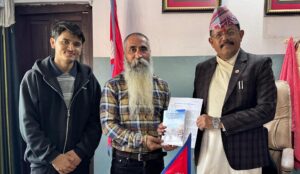
Here’s the relevent news coverage: